Total Pageviews

Showing posts with label #ILLEGAL MIGRATION. Show all posts

Saturday, 1 August 2026

Illegal migration in Europe and Spain has become one of the continent’s most pressing challenges,

 Illegal migration in Europe has become one of the continent’s most pressing challenges, straining economies, fuelling social unrest, and reshaping political debates. The Ceuta crisis is only one flashpoint in a wider pattern where migration is both a humanitarian issue and a geopolitical tool. Europe’s experience offers lessons for India, which must prepare robust countermeasures to prevent similar destabilization.

1. Economic Effects of Illegal Migration in Europe

  • Fiscal burden: Welfare systems face pressure as irregular migrants often access healthcare, housing, and education.
  • Labor market impact: While some migrants fill low-skill jobs, unregulated inflows depress wages in certain sectors and increase unemployment among locals.
  • Infrastructure strain: Cities like Paris, Berlin, and Athens report overcrowded shelters, rising housing costs, and stretched public services.
  • Security costs: Border control, policing, and deportation procedures consume billions annually.

2. Social & Political Effects

  • Social unrest: Protests in Germany, France, and Italy highlight tensions between locals and migrant communities.
  • Rise of populism: Anti-immigration parties gain ground, reshaping European politics.
  • Religious & cultural friction: Rapid demographic change sparks debates on integration, identity, and extremism risks.
  • Humanitarian crises: Migrants often live in precarious conditions, creating ghettos and fueling resentment.

3. Why Media Coverage is Limited

  • Political sensitivity: Governments and mainstream outlets often avoid highlighting illegal migration to prevent fueling xenophobia.
  • Humanitarian framing: Coverage emphasizes refugee rights, downplaying irregular migration to maintain moral legitimacy.
  • Geopolitical caution: US and EU media avoid narratives that could damage relations with African or Middle Eastern states.

4. Steps Europe Must Take

  • Stronger border enforcement: Invest in Frontex and biometric Entry/Exit systems.
  • Target trafficking networks: Crack down on agents exploiting migrants.
  • Balanced asylum policy: Differentiate genuine refugees from economic migrants.
  • Integration programs: Language, vocational training, and community outreach to reduce friction.
  • Partnerships with origin countries: Aid and trade incentives to reduce push factors.

5. Lessons for Europe

  • Migration can be weaponized: Morocco’s use of migration as leverage shows how states exploit humanitarian flows.
  • Uncontrolled generosity backfires: Overly liberal asylum policies create pull factors.
  • Integration is key: Failure to integrate migrants fuels ghettos and unrest.

6. Lessons for India

  • Border vigilance: India must strengthen surveillance along porous borders (Bangladesh, Myanmar, Nepal).
  • Legal clarity: Clear distinction between refugees (e.g., Tibetans) and illegal migrants (e.g., Rohingya).
  • National registry: Implement robust tracking of foreign nationals.
  • Preventive diplomacy: Work with neighbors to stop trafficking networks.
  • Socio-economic safeguards: Ensure migrants do not overwhelm welfare systems or alter demographic balance.

Comparative Table

Aspect

Europe’s Experience

Lesson for India

Border control

Weak external borders exploited

Strengthen land borders with tech & manpower

Media narrative

Downplays illegality, stresses rights

Transparent reporting to avoid misinformation

Economic impact

Welfare strain, wage depression

Protect local labor markets

Social cohesion

Ghettos, unrest, rise of populism

Prioritize integration & demographic balance

Geopolitical use

Migration weaponized by neighbors

Anticipate similar tactics from adversaries

In summary: Europe’s migration crisis is both humanitarian and geopolitical. For India, the key takeaway is that illegal migration is not just about economics—it can destabilize society and be exploited by hostile neighbors. India must combine border vigilance, legal clarity, and preventive diplomacy to avoid Europe’s mistakes

Wednesday, 3 June 2026

Migration, Demographic Change, and Persecution of Hindus and Other Minorities in Pakistan and Bangladesh (1950–2026)


Demographic Change in Pakistan

Pakistan (Present-Day Pakistan)

According to the 1941 Census, Hindus constituted roughly 14–15% of the population in territories that today form Pakistan, while Sikhs accounted for another 6%. The Partition of 1947 triggered one of the largest forced migrations in human history. About 4.7 to 5 million Hindus and Sikhs migrated from West Pakistan to India between 1947 and 1951.

Hindu Population in Pakistan

Year

Hindu Population %

1941

~14.8%

1951

~1.6%

1998

~1.85%

Current Estimates

2–3%

The dramatic decline occurred mainly during and immediately after Partition, when most Hindus and Sikhs fled or were expelled from what became Pakistan.


Demographic Change in East Pakistan / BangladeshThe situation in East Pakistan (now Bangladesh) followed a different trajectory.

Hindu Population in East Pakistan / Bangladesh

Year

Hindu Share

1947

~28–31%

1951

~22–30%

1961

~19%

1974

~14%

Today

~7.9–8.5%

Researchers generally agree that the Hindu percentage declined continuously after Partition.


Major Waves of Migration into India

1. Partition Migration (1947–1951)

From West Pakistan

  • Hindus and Sikhs migrating to India:
    • Approximately 4.7–5 million
  • Major origin areas:
    • Punjab
    • Sindh
    • North-West Frontier Province
    • Balochistan

Destination areas included:

  • Delhi
  • Punjab
  • Haryana
  • Rajasthan
  • Gujarat
  • Maharashtra

This remains the largest migration wave.

2. East Pakistan Migration (1950–1965)

Following:

  • Anti-Hindu riots
  • Property confiscation laws
  • Political discrimination

large numbers of Bengali Hindus migrated to:

  • West Bengal
  • Assam
  • Tripura
  • Meghalaya

Estimates vary, but several million migrated during this period.

3. 1964–1971 Migration

A major scholarly estimate by Bangladeshi economist Dr. Abul Barkat concluded that:

11.3 million Hindus left Bangladesh between 1964 and 2013 due to religious discrimination and insecurity.

This estimate is frequently cited in discussions of long-term minority outmigration.

4. Bangladesh Liberation War Migration (1971)

The largest post-Partition refugee flow occurred during the Bangladesh Liberation War.

By November 1971:

  • About 10 million refugees fled into India.
  • Most studies indicate that a majority of these refugees were Hindus.

Refugees entered:

  • West Bengal
  • Tripura
  • Assam
  • Meghalaya
  • Bihar

Many returned after Bangladesh became independent, but several million remained permanently in India.

5. Post-Independence Bangladesh Migration (1972–2026)

Migration continued because of:

  • Land seizures
  • Communal violence
  • Religious discrimination
  • Economic considerations

Most migrants settled in:

  • West Bengal
  • Assam
  • Tripura
  • Delhi
  • Maharashtra
  • Gujarat

The cumulative total of migrants from Bangladesh to India since 1947 is generally estimated in the tens of millions, although precise religious breakdowns remain disputed.

How Many Hindus Were Killed?

Partition Violence (1947–48)

Scholars estimate total deaths during Partition between:

  • 200,000 and 2 million

Victims included:

  • Hindus
  • Sikhs

East Pakistan Violence (1950)

Large-scale anti-Hindu violence occurred in:

  • Dhaka
  • Barisal
  • Khulna

Thousands were killed and many more displaced.

1964 Riots

Following unrest across East Pakistan:

  • Thousands of Hindus fled to India.
  • Casualty estimates vary widely.

The 1971 Bangladesh Genocide

This remains the most important episode affecting the Hindu population.

The Pakistani Army launched military operations on 25 March 1971 against Bengali nationalists and civilians.

Multiple contemporary diplomatic records and later investigations indicate that Hindus were specifically targeted.

Death Estimates

Different estimates exist:

Source

Estimated Deaths

Bangladesh Government

~3 million

Some Western scholars

300,000–500,000

Other studies

1–3 million

Were Most Victims Hindus?

Evidence shows Hindus were disproportionately targeted.

American diplomat Archer Blood reported systematic targeting of Hindus. U.S. Senator Edward Kennedy also documented selective violence against Hindu communities.


  • Hindus were a primary target.
  • A very large proportion of the victims were Hindus.

Forced Conversions

Pakistan

Human-rights organizations have documented:

  • Forced conversion of Hindu girls
  • Forced conversion of Sikh girls
  • Forced marriages

The problem is concentrated particularly in:

  • Sindh Province
  • Southern Punjab

Reliable cumulative figures since 1950 do not exist.

Bangladesh

There is evidence of:

  • Religious intimidation
  • Land grabbing
  • Occasional forced conversions

However, migration appears to have been a much larger demographic factor than conversion.

Christians, Buddhists and Sikhs

Pakistan

Sikhs

Most Sikhs left during Partition.

Estimated migration:

  • Approximately 1.5–2 million Sikhs moved to India between 1947 and 1951.

Broad Research-Based Conclusions

Pakistan

  • Nearly all Hindus and Sikhs of West Pakistan migrated during Partition.
  • Approximately 5–7 million Hindus and Sikhs moved to India between 1947 and 1951.

Bangladesh / East Pakistan

  • Hindu share declined from roughly 28–31% at Partition to around 8% today.
  • One major academic estimate suggests 11.3 million Hindus left Bangladesh between 1964 and 2013.
  • About 10 million refugees entered India during the 1971 war, the majority believed to be Hindus.

Killings

  • The 1971 Bangladesh genocide caused between 300,000 and 3 million deaths depending on the source consulted.
  • Hindus were a specifically targeted community, though victims also included many Bengali MuslimsAWAMI SUPPORTERS

Total Migration to India Since 1947

A reasonable synthesis of available scholarship suggests that:

  • 5–7 million Hindus and Sikhs migrated from West Pakistan during Partition.
  • More than 10–15 million Hindus are estimated to have migrated from East Pakistan/Bangladesh over the decades following Partition.
  • Additional smaller numbers of Sikhs, Christians, Buddhists, Parsis, and Hindus migrated from Afghanistan, Pakistan, and Bangladesh in later decades.

Thus, the cumulative migration of persecuted or vulnerable non-Muslim minorities from Pakistan, East Pakistan/Bangladesh, and Afghanistan into India since 1947 is commonly estimated to exceed 15–20 million people, .

This remains one of the largest and longest-running minority migration movements in South Asia since Partition.

Wednesday, 27 May 2026

Migrants Claim TMC Gave Documents for Votes in West Bengal

 The situation in West Bengal has shifted dramatically following the May 2026 Assembly elections, marking a massive turning point for both state politics and border enforcement.

The newly elected BJP government, led by Chief Minister Suvendu Adhikari, has taken immediate administrative action after securing a landslide victory over Mamata Banerjee’s Trinamool Congress (TMC). At the heart of this post-election shift is an aggressive crackdown targeting illegal immigration.

The Operational Model: "Detect, Delete, and Deport"

The new administration has formally operationalized its "Detect, Delete, and Deport" strategy to bypass prolonged legal loops and expedite the removal of undocumented individuals.

  • Bypassing the Courts: Under the new framework, state police are instructed to arrest suspected illegal infiltrators and hand them over directly to the Border Security Force (BSF), who then coordinate directly with Border Guards Bangladesh for immediate deportation.

  • First Holding Centers Built: The State Home Department directed all District Magistrates to build temporary "holding centers." Malda became the first district to operationalize a center, immediately housing nine suspected Bangladeshi nationals (including three women and six minors).

  • Mass Mass Deletions: This administrative push follows a massive Special Intensive Revision of the state's electoral rolls, which saw 83.86 lakh (~8.4 million) voters deleted from West Bengal's registries due to falsified or dual documentation.

Political Fallout & Border Panic

The implementation of this policy has sent shockwaves through local communities and triggered a tense blame game between political factions.

  • Allegations of "Votes for Documents": Videos circulated by local media channels like ABP Ananda feature alleged illegal migrants claiming that the previous TMC government facilitated local identity documents and enrolled them in state cash-handout programs—such as the Lakshmi Bhandar scheme—specifically to secure their voting bloc.

  • The BSF Guarding Dispute: The role of the central border forces remains highly controversial. While the new BJP government has moved quickly to purchase and hand over 31.9 acres of land to the BSF to patch up 27 km of unfenced border gaps, the former TMC leadership has historically pushed back. Prior to the election, Mamata Banerjee explicitly blamed the Center, arguing that because the border is guarded entirely by the BSF, any systemic infiltration points to a failure of central border control rather than state-level policing.

  • Voluntary Exodus at Checkpoints: The pressure from incoming eviction orders has sparked a panic-driven flight. Hundreds of suspected undocumented families—many working in informal sectors—have packed their belongings and gathered at major border points like the Hakimpur checkpost in North 24 Parganas, opting to cross back into Bangladesh voluntarily rather than face detention in the newly established holding facilities.

Illegal Bangladeshi Infiltration: An Extremely Serious Challenge to National Security Part 1


 “Infiltration is a Major Challenge”

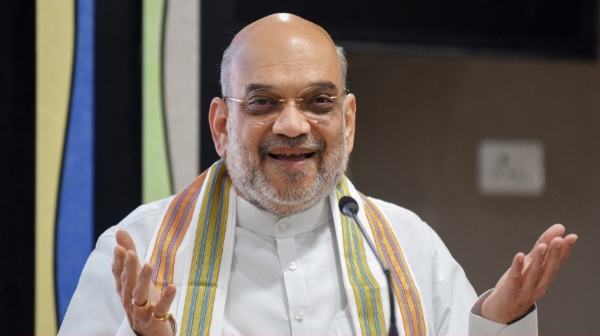
Union Home Minister Amit Shah announced on 26 May 2026 that the Government of India has constituted a high-level committee to examine the “demographic changes taking place in the country due to illegal infiltration and other unnatural causes.”

“Unnatural demographic changes caused by infiltration pose a very serious challenge to the present and future of any nation.”

The committee will be chaired by retired Justice Prakash Prabhakar Naolekar. Its members will include the Census Commissioner, former IAS officer Durga Shankar Mishra, former IPS officer Balaji Srivastava, and economist Dr. Shamika Ravi. The Joint Secretary (Foreigners-I) in the Ministry of Home Affairs will function as the Member Secretary of the committee.

The committee will undertake a comprehensive assessment of demographic changes occurring across India due to illegal migration” It will also recommend “structured and time-bound measures” to address the issue.

Shah described demographic change as a “serious matter” that affects the country’s social structure and the protection of tribal communities.

Prime Minister Narendra Modi had earlier stated that “infiltrators are creating a new crisis for the nation. Linking demographic change with national security and social stability, the Prime Minister further stated that “no nation in the world can surrender itself to infiltrators.”

West Bengal Became the Main Gateway of Bangladeshi Infiltration

During the tenure of the Mamata Banerjee government, West Bengal emerged as one of the principal gateways for illegal Bangladeshi infiltration into India. However, after political changes and increasing focus on national security, extensive campaigns have now been launched to strengthen border security and take stricter action against illegal Bangladeshi infiltrators.

The focus is no longer limited to preventing fresh infiltration. Authorities have also begun large-scale efforts to identify and act against illegal Bangladeshi nationals already residing secretly within India. There is now growing hope that the number of illegal infiltrators in India may gradually decline in the coming years.

Illegal Bangladeshi infiltration has had far-reaching implications for India’s national security, social stability, demographic balance, electoral system, and organized crime networks. Following the creation of Bangladesh, large-scale migration that began, and over the decades has gradually evolved into organized infiltration networks.

Migration Expanded to Major Metropolitan Cities

The India-Bangladesh border is extremely complex. Large stretches include rivers, marshlands, forests, agricultural regions, and densely populated settlements, making complete border security extremely difficult.

Taking advantage of these geographical conditions, human trafficking networks developed extensive infiltration routes. Economic hardship, unemployment, population pressure in Bangladesh, and employment opportunities in India encouraged many Bangladeshi citizens to enter India illegally.

Over time, this migration was no longer confined to border states. It spread into many states and major Indian metropolitan centers such as Mumbai, Pune, Delhi, Hyderabad, and Bengaluru.

For a long period, the issue was often viewed through the prism of politics and vote-bank calculations rather than as a serious national security threat. In certain areas, illegal migrants allegedly received political protection because they were viewed as future vote banks.

The Border Security Force has often been criticized for failing to stop infiltration across the Bangladesh border. The required institutional willpower and operational capability necessary for comprehensive border management have not always been visible.

In many places, fake Aadhaar cards, voter identity cards, ration cards, and other forged documents became easily available. This enabled illegal infiltrators to settle more permanently within India.

Border Fencing Work Accelerated

However, in recent years, significant changes have become visible. The central government has begun treating border security as an extremely important component of national security and has initiated several strict measures.

Particularly in West Bengal, large tracts of land have been transferred to the Border Security Force for border protection infrastructure. Fencing work across nearly 300 to 400 kilometers of border areas is expected to accelerate rapidly.

Previously, land disputes, local resistance, and political obstacles had delayed such projects. Now, however, double-layer fencing, floodlights, border roads, observation towers, and modern electronic sensors are being deployed to strengthen border management.

Simultaneously, the Border Security Force should significantly increase night patrols, riverine patrols, drone surveillance, thermal imaging, and smart surveillance systems.This will improve monitoring and control over infiltration routes.

Campaign Against Illegal Settlements

Another major development in West Bengal has been the campaign to remove illegal settlements.

For many years, illegal Bangladeshi settlers occupied government land, railway property, forest areas, and slum regions. Authorities are now identifying such settlements and taking steps to dismantle them.

This campaign is considered important because once large illegal settlements become established, they eventually evolve into politically and socially sensitive zones, making future action difficult.

At the same time, large-scale document verification drives have been launched. Police and intelligence agencies are scrutinizing fake Aadhaar cards, voter cards, birth certificates, and ration cards.

Action has also been taken against criminal gangs involved in manufacturing forged documents. This is particularly significant because fake identity documentation forms the backbone of illegal migration networks.

Efforts are also underway to establish dedicated detention centers or temporary holding facilities for detained Bangladeshi nationals. Earlier, many arrested infiltrators disappeared due to weaknesses in the legal process and inadequate detention arrangements. Authorities are now increasingly relying on biometric registration systems to ensure more effective deportation procedures.

Tuesday, 17 February 2026

बंगालचे 'बोगस' राजकारण आणि शुद्धीकरणाचा दणका


लोकशाहीची जननी मानल्या जाणाऱ्या भारतामध्ये 'मतदान' हे सर्वोच्च कर्तव्य आहे. पण जर हेच मतदान 'बोगस' मतदारांच्या जीवावर आणि प्रशासकीय अधिकाऱ्यांना धमकावून होत असेल, तर ती लोकशाही नसून 'ठोकशाही' ठरते. पश्चिम बंगालमध्ये सध्या नेमका हाच संघर्ष सुरू आहे. निवडणूक आयोगाने हाती घेतलेली मतदारयादी शुद्धीकरणाची (SIR) मोहीम आणि त्यावर तृणमूल काँग्रेसकडून होणारे हिंसक हल्ले, हे बंगालमधील ढासळत्या कायदा-सुव्यवस्थेचे जिवंत पुरावे आहेत.

हिंसेचाळ आडोसा आणि छुप्या भीतीचे सावट

निवडणूक आयोगाचे निरीक्षक सी. मुरुगन यांच्यावर झालेला हल्ला ही केवळ एक सुटी घटना नाही. यापूर्वी 'ईडी' आणि 'सीबीआय'च्या पथकांवरही असेच हल्ले झाले आहेत. जेव्हा एखादी घटनात्मक संस्था पारदर्शकतेने काम करण्याचा प्रयत्न करते, तेव्हा सत्ताधारी पक्षाच्या कार्यकर्त्यांनी रस्त्यावर उतरून हिंसा करणे, हे 'बोगस' मतदारांचे बिंग फुटू नये यासाठी केलेले धडपड आहे. बंगालमध्ये गेली अनेक दशके घुसखोरांना कागदपत्रे देऊन त्यांना मतदानाचे अधिकार बहाल केले गेले, हा आता केवळ आरोप उरलेला नाही, तर ती एक धक्कादायक वस्तुस्थिती म्हणून समोर येत आहे.

६० लाख बोगस मतदारांचे गौडबंगाल

आतापर्यंत सुमारे ६० लाखांहून अधिक बोगस मतदारांची नावे यादीतून वगळली जाणे, हे निवडणूक आयोगाचे मोठे यश आहे. एका राज्यात इतक्या प्रचंड संख्येने अपात्र मतदार असणे, हे राज्याच्या लोकसंख्याशास्त्रीय (Demographic) बदलाचे भीषण चित्र मांडते. बनावट आधार कार्ड आणि रेशन कार्डाच्या जोरावर निवडणुका जिंकण्याचे 'ममता मॉडेल' आता अडचणीत आले आहे. हे शुद्धीकरण पूर्ण झाले, तर तृणमूल काँग्रेसच्या पायाखालची जमीन सरकणार, हे निश्चित असल्यानेच या मोहिमेला विरोध होत आहे.

मृत्यूचे राजकारण आणि हतबल प्रशासन

नैसर्गिक मृत्यू किंवा वैयक्तिक कारणांनी झालेल्या आत्महत्यांचे खापर निवडणूक आयोगाच्या 'नोटािस'वर फोडणे, हा राजकीय संधीसाधूपणाच आहे. जे मतदार ८५ वर्षांवरील आहेत, त्यांच्या घरी जाऊन तपासणी करण्याची तरतूद आयोगाने केली असतानाही, "संविधान धोक्यात आहे" अशी ओरड करणाऱ्यांनीच आज घटनात्मक संस्थांना वेठीस धरले आहे.

बदलाची सुप्त लाट

दुसरीकडे, बंगालमधील सामान्य जनता आता 'विकासाच्या राजकारणा'कडे आशेने पाहत आहे. उत्तर प्रदेश, मध्य प्रदेश आणि ओडिशा सारख्या राज्यांनी भाजपच्या काळात जो विकासाचा वेग गाठला, तो बंगालला का गाठता आला नाही? हा प्रश्न शिक्षित बंगाली तरुणांना आता सतावतोय. उद्योगधंद्यांचा अभाव आणि वाढत्या भ्रष्टाचाराने ग्रासलेल्या बंगालला 'ऊर्जितावस्था' हवी आहे.

निष्कर्ष

पश्चिम बंगालमध्ये सुरू असलेली 'एसआयआर' मोहीम केवळ मतदारयादी दुरुस्त करण्यासाठी नाही, तर ती बंगालच्या लोकशाहीला लागलेली 'घुसखोरीची वाळवी' साफ करण्यासाठी आहे. जर ही मोहीम यशस्वी झाली, तर येणाऱ्या निवडणुकांमध्ये गुंडशक्ती आणि बोगस मतदानापेक्षा 'जनमताचा' विजय होईल. दीदींच्या 'एकाधिकारशाही'ला आता लोकशाहीच्या खऱ्या शुद्धीकरणानेच प्रत्युत्तर मिळणार आहे.

Sunday, 27 July 2025

Inside Assam's Civilisational War: Himanta's Land Reclamation Campaign – Part 2

 The Emotional Landscape of Eviction

While the state's bulldozers attract media attention, it is the silence of Assam's indigenous people that profoundly shapes the eviction debate. For decades, they have witnessed government neglect, illegal migration, and organized encroachment alter the demographics of their ancestral lands. Now, as the state finally takes action, their support stems not from animosity but from a deep sense of loss.

Voices of the Dispossessed

I aim to present the voices of these indigenous people, not merely as footnotes to policy but as the original stakeholders whose existence is intimately linked to the land.

On the outskirts of Sipajhar, where a widely reported eviction drive occurred in 2021, lies a nearly vanished Bodo hamlet. Of the 37 families that lived there in the 1980s, only 8 remain.

Eighty-year-old Bhaben Basumatary recalls walking barefoot through mustard fields to school, reminiscing about a river that now barely exists. "The others left," he states. "Not because they sold the land, but because they were threatened, outnumbered, and made to feel like strangers."

When asked if the eviction drive brought him relief, he replies, "Relief? No. But justice, yes. For years, they built mosques, markets, and madrassas on grazing grounds. They even renamed our river paths. Now at least someone is listening."

A Return to Roots

This sentiment resonates with the youth in his village, many of whom have moved to Mangaldoi or Guwahati. However, a few, like 24-year-old Kamesh, have returned post-eviction. "We're clearing the old fields," he says. "I want to try farming again."

In Batadrava, the birthplace of Srimanta Sankardev and a sacred site for Assamese Vaishnavites, the erosion of land is both a physical and cultural reality. Over the past 30 years, indigenous Assamese families have lost farmland and cultural sites to systematic encroachment.

Cultural Erosion and Resistance

"I'm not against any community," asserts Mrigen Goswami, an Assamese teacher who has witnessed rampant encroachment by Bengali-speaking Muslims. "But when they came, they didn't just build homes. They changed everything: language, festivals, even the names of birds."

Goswami explains that many in his village were afraid to speak out. "Political leaders came for votes. Local Congress MLAs provided benefits to Muslims. If we protested, we were branded anti-minority." Now, with the government's intervention, he senses a shift. "For the first time, I feel the state is on our side. It's late, but better than never."

He gestures toward a cluster of bulldozed structures at the edge of a paddy field. "They will build again if we are not vigilant. But for now, the land breathes again."

The Struggle for Identity in Dhubri

In the chars (riverine islands) of Dhubri, communities like the Koch-Rajbongshis, Deshis (indigenous Muslims), and other native fisherfolk have faced growing ethnic marginalization due to demographic changes.

Fisherman Ramesh Koch expresses his bitterness. "My grandfather fished here when this was all forest. He had a boat, three cows, and six acres. Today, I have half a boat, no cows, and I pay a 'tax' to illegal settlers to access my own river."

When asked about this tax, he shrugs. "They call it a 'donation' for the madrassa. If we don't pay, our nets are cut. Who do we complain to? The gaonburah (village headman) is one of them."

Ramesh's story is not unique. Across multiple chars, a pattern emerges: illegal settlers, backed by political networks, enforce shadow governance in areas long abandoned by the state. He views the eviction drives as a necessary form of civilizational correction. "We're not against anyone living peacefully. But this is not peaceful. This is demographic conquest."

The Role of Tiwa Tribal Women

In Morigaon, particularly near the wetlands (beels), Tiwa tribal women have taken a central role in resisting encroachment. For them, wetlands are not just water bodies; they are vital ritual spaces and ecological habitats.

Purnima Lalung, part of a local cooperative, recalls the day a madrassa was built on the edge of their community fishing pond. "We protested. They claimed they had permission. But we checked—there was no land record, no clearance. They just built it and waited for a politician to arrive."

After the 2023 eviction drive in her area, Purnima led a group of women to clean the beel and replant aquatic vegetables. "We've witnessed our culture die in slow motion. The beels were filled with debris, and our fish were killed. Now we are reclaiming not just land but our rights to it."

The Fear of Speaking Out

Despite their quiet support for the eviction drives, many indigenous Assamese remain reluctant to speak on record. The fear of being labeled "xenophobic," "RSS stooges," or "Hindutva agents" is palpable. Several tribal elders and Assamese Hindu leaders requested anonymity even when recounting personal trauma.

One Dimasa elder in Hojai, who lost a temple pond to encroachers, states bluntly, "The NGO wallahs will call you fascist. The Delhi press will call you genocidal. We just want our fields back."

The Emergence of a New Narrative

This silence, however, is beginning to crack. The new narrative led by Chief Minister Himanta Biswa Sarma frames eviction not as an act of hatred but as a necessary historical correction and ecological justice, emboldening more people to speak out.

It is crucial to acknowledge the demographic shifts that have occurred. The H.S. Brahma Committee and Upamanyu Hazarika Commission indicate that districts like Dhubri, Goalpara, Barpeta, and South Salmara have experienced a dramatic rise in Bengali-speaking Muslim populations, often at the expense of indigenous tribes and Hindu peasants.

Civilisational Anxiety and Identity

This situation has resulted in a unique civilizational anxiety—not solely about territory but concerning identity, language, and continuity. A young Assamese activist from the All Assam Students' Union (AASU) in Dhekiajuli summarizes the sentiment: "Our people were displaced without war. Now the state is finally doing what it should have done decades ago. If that makes us bulldozer nationalists, so be it."

For Assam's indigenous communities, eviction represents not vengeance but a form of mourning—a mourning for rivers renamed, hills razed, temples defaced, festivals mocked, and children raised without any memory of land ownership. It also offers a glimpse of closure.

The Himanta Doctrine: A Civilizational Approach

In India, bulldozers often symbolize brute force. Yet in Assam, under Chief Minister Himanta Biswa Sarma, the bulldozer has taken on a civilizational significance. It serves not just as a tool for demolition but as a message of justice and reclamation.

Sarma has repeatedly stated, "Encroachment is not poverty; it is politics." This political agenda aims to reverse years of neglect. At its core lies a doctrine that merges governance with cultural memory, law with identity, and administration with civilizational assertion.

Legacy Over Numbers

For many observers, evicting a few thousand settlers may seem severe. However, Sarma's narrative focuses not on numbers but on stories. "Where is Batadrava in the public memory?" he asked in early 2021. "Why did we allow the birthplace of Sankardev to be surrounded by illegal settlements? Why did we wait 40 years?"

From Batadrava to Lumding, each cleared site is not merely land reclaimed; it is civilization reasserted. The bulldozers traverse not only illegal structures but also the layers of state apathy and elite cowardice that allowed Assam's frontiers to become fluid.

A Proactive State

Sarma has discarded the language of "neutrality" that restrained previous administrations. "The Assamese state will protect its land, forests, rivers, and civilization. We are not here to pretend," he declared. This shift from passive governance to proactive guardianship has unsettled many.

The eviction drives are not random; they form part of a larger cultural reorientation. It is why madrassas with foreign ties have been demolished and why government schools are now required to raise the national flag.

Rejecting Selective Sympathy

A key aspect of the Himanta Doctrine is the refusal to bow to the media's guilt narrative. Most governments would falter at the first viral image of a crying child or a demolished home. However, Sarma's government opts to highlight the stories of displaced indigenous farmers and the environmental degradation caused by encroachment.

During press conferences, the Chief Minister cites forest records, court orders, and satellite images, emphasizing cultural pride over political correctness.

Addressing 'Land Jihad'

Within government circles, the term "land jihad" is increasingly used to describe the systematic encroachment of public lands by Islamist groups supported by political and transnational interests. Reports identify patterns of expansion near temples, sattras, and sensitive borders.

Sarma's strategy is legal and precise. Unlike the emotive rhetoric of the past, his approach emphasizes law, documentation, and administrative resolve. Yet, the bulldozers are not merely clearing land; they are redefining the boundaries of belonging.

A Sustainable Civilizational Governance

The Himanta Doctrine is not a passing trend; it represents a new model of governance in India that unapologetically protects its civilization. This approach merges state legitimacy with national identity, asserting priorities without waiting for approval from Delhi.

Critics may label it communal, but the evidence is compelling: wetlands are reviving, sattras are being secured, forests are regaining their boundaries, and indigenous voices, once silenced, are finally being heard.

The Challenges Ahead

Despite the determination of the Himanta administration, the road ahead remains fraught with challenges. While bulldozers clear structures, the battle for land extends beyond the physical; it's waged in courtrooms, media outlets, and international forums. Behind each eviction lies a network of resistance that is legal, political, and ideological.

One significant barrier to eviction drives is the legal framework that allows well-funded groups to impede state action. Public Interest Litigations (PILs), stay orders, and humanitarian appeals—often coordinated by activist NGOs and political fronts—are beginning to stifle the pace of clearances.

A forest officer in Barpeta candidly states, "We follow the rules, issue notices, conduct surveys, and just when we act, someone appears in court claiming their 'fundamental rights' are violated."

The Media's Role in Shaping Perception

Following each eviction, national and international media quickly disseminate emotionally charged visuals: crying children, distressed families, and smoke rising from demolished homes. Rarely are land documents presented, or the perspectives of forest guards and displaced Assamese tribals featured. The narrative often overlooks the long history of encroachment and violence against officials.

This manipulation of public perception poses a significant challenge to Assam's governance. Even when the law supports the state's actions, optics are engineered to frame civilizational corrections as acts of communal cruelty.

Political and Ideological Resistance

The eviction drives in Assam do not occur in isolation; they are intertwined with broader geopolitical currents, especially as many illegal settlers are believed to have origins in Bangladesh, with connections to radical transnational Islamic networks.

Activists linked to global Islamic organizations and international human rights bodies have begun to voice concerns, sometimes quietly and at times through platforms like the UN Human Rights Council.

Domestically, Islamist political groups, including the AIUDF, Congress, and regionalists, are fanning communal anxieties, portraying every eviction as an anti-Muslim conspiracy, even when the land involved is clearly forest, wetland, or government property.

The Risks for Enforcers

Eviction drives are physically demanding, emotionally charged, and politically risky. Forest staff and magistrates work under minimal protection, limited budgets, and intense scrutiny. One young magistrate from Barpeta admits, "After the third drive, I began to fear for my family. My phone number was leaked, and my mother stopped going to the market."

Unless the state continues to protect and support its enforcers, bureaucratic resolve may begin to waver. The memories of earlier administrations, where eviction notices were ignored and politically inconvenient actions shelved, linger in many departments.

The Future of Assam's Reclamation

The most pressing long-term concern is political: what happens if a future government chooses to reverse course? Will encroachers return, armed with new ration cards, voter lists, and promises of amnesty?

This fear is palpable among many indigenous Assamese. "It took Himanta to undo what Tarun Gogoi and Congress did for thirty years," says a retired teacher in Darrang. "But what if tomorrow another Gogoi comes? Will we lose everything again?"

Institutionalizing Change

The only safeguard against such a scenario is institutionalization. Eviction should become policy, not a campaign tactic. Legal reforms, clear mapping, protected zones, and community vigilance are essential. Remember, nearly 2.1 million acres still remain under encroachment.

Despite the challenges, something irreversible has begun. The state is no longer neutral, and citizens are no longer afraid to speak out. The idea of Assam is transforming from mere cultural memory into a living, assertive political force.

A Just Bulldozer: Reclaiming the Future

In the midst of a chaotic eviction drive in Dhalpur a few years ago, a senior police officer reportedly remarked, "We are not just removing houses. We are reclaiming the future."

This offhand comment encapsulates the ethos of Assam's eviction drives today. They represent not merely law enforcement but a civilizational act of rebalancing. In this context, the bulldozer transcends its mechanical function; it symbolizes state will, historical correction, and, at times, karmic necessity.

The Moral Imperative

This framing makes many uncomfortable. Critics argue that it is dangerous to spiritualize state force. Yet, such objections overlook that India's moral vocabulary has always drawn from a civilizational sense of justice rather than Western abstractions. The Bhagavad Gita teaches that action is necessary, even painful, to fulfill dharma.

Assam today is that battlefield, where delayed action has resulted in prolonged suffering. Encroachments did not occur overnight; they were enabled by appeasement politics, bureaucratic paralysis, and demographic aggression. The bulldozer enters only when all other state mechanisms have failed.

Chief Minister Himanta Biswa Sarma embraces this moral clarity unapologetically. He avoids bureaucratic jargon, speaking in a civilizational idiom that resonates with the people's sense of culture, identity, and history. His emphasis on a "civilizational fight" is not mere rhetoric but a clear policy direction.

Conclusion: The Silent Frontline

As eviction notices are prepared for another drive, somewhere in Nagaon, Dhubri, or Barak Valley, a young forest officer readies to face resistance. Somewhere, an Assamese widow hopes to reclaim her father's paddy field. Somewhere, an imam preaches that "land is Allah's, and those who resist are kafirs."

This is Assam's silent frontline. They may not speak on panels or write op-eds, but they carry lathis, GIS maps, and old land records. With every eviction, they recover more than just land; they reclaim memory, sovereignty, and the sacred promise of justice.

In this reclamation lies not just the future of Assam but a testament to the resilience of its people

Inside Assam's Civilisational War: The Untold Heroes of Himanta's Land Reclamation Campaign PARAT 1


Silent Enforcers in a Chaotic Landscape

Behind every eviction in Assam lies a frontline of uncelebrated enforcers—police officers, forest guards, and tribal villagers—who confront not only encroachers but also a system that has long neglected them. This is their story.

The Morning of Confrontation

As the morning mist lingered over Paikan Reserve Forest, bulldozers rolled in, breaking the dawn's tranquility. At barely 6 a.m., the forest's silence yielded to the roar of engines and escalating tension.

A line of forest guards, some armed only with bamboo lathis, stood resolute. Behind them, police personnel adjusted their helmets, preparing for the chaos that defined eviction mornings in Assam.

A constable from Goalpara, beads of sweat forming beneath his flak jacket, scanned the growing crowd. “It’s always like this,” he muttered. “They come with children and Qurans. The cameras follow. Then the stones fly.”

The Clash of Narratives

Within minutes, mobile phones were raised. Cries of “Ei amader jamin! (This is our land)” echoed across the beel. A woman sat defiantly in front of a bulldozer, yelling at a young magistrate. A boy climbed onto a madrassa, waving a green flag and demanding the officials leave.

Soon, the atmosphere erupted into scuffles, and viral clips emerged. Edited footage circulated on WhatsApp and Twitter, transforming into headlines even before the eviction was complete.

Misrepresented Realities

By evening, news portals proclaimed: “Assam Police Fires on Poor Muslim Villagers,” “Children Rendered Homeless in Bulldozer State,” “Himanta’s Communal Land Grab.” None mentioned the reserve forest, the history of encroachment, or the years of eviction notices ignored. The elephant corridor continued to vanish under illegal settlements.

Yet, behind the headlines lies a frontline rarely acknowledged: the enforcers—forest officers, constables, magistrates—tasked with addressing what decades of governments have neglected. They face abuse, threats, and ridicule, often operating in a grey area where legality clashes with emotion, and nationalism is misconstrued as cruelty.

Understanding the Land and Its History

To grasp the fury surrounding Assam’s eviction drives, one must consider the land itself—who it belongs to, how it was appropriated, and why the state is finally taking action.

Beneath media narratives lies a geography of tension: floodplains turned into vote banks, wetlands transformed into settlements, and forest reserves becoming sites of demographic contests. The question transcends legality; it concerns whether India’s northeastern frontier will remain sovereign or succumb to a slow-motion invasion disguised as settlement.

The Paikan Reserve Forest: A Case Study

Take Paikan Reserve Forest, one of the most contested eviction sites. Official records classify this land under the Assam Forest Regulation of 1891, protecting it from cultivation or private habitation. Yet, over three decades, large areas have been cleared and constructed upon, evolving from temporary shelters to permanent structures.

What began as grazing land or seasonal cultivation morphed into permanent habitation, supported by local politicians and a vast underground economy of land brokers.

The Government's Claim and the Reality on the Ground

The Assam government asserts that since May 2021, it has cleared encroachments from over 39,000 acres, impacting countless families. In Hasila Beel, around 660 families were evicted in June 2025 alone, while over 1,080 families faced eviction in Paikan by mid-July.

Eviction notices, according to district authorities, were served multiple times, some dating back to 2018. Yet, most were ignored, leading to organized resistance. Settlers gathered in large groups, local activists rallied the media, and children were positioned at the forefront, daring the state to act.

Legal Framework vs. Emotional Public Perception

Despite the clear legal framework against encroachment, emotional narratives often overshadow legal realities. The sight of a crying woman or a bulldozer demolishing a mosque goes viral in seconds, while the explanation of years of warnings and illegality gets lost in the scroll.

In areas where Bengali is the dominant language, the narrative shifts. These are not merely impoverished villagers displaced by hardship; many are part of organized encroachment networks backed by political intermediaries and land mafia operatives.

The Burden on Enforcers

Thus, the eviction drives are not merely administrative actions; they are efforts to restore ecological balance and uphold sovereignty. Yet, the burden of these actions falls heavily on the lowest-ranking personnel—forest guards, police constables, and junior magistrates. They navigate a complex landscape of bulldozers, media scrutiny, and communal tensions.

The Human Side of the Bulldozer State

In the narrative of Assam's eviction drives, the most visible agents are often the least powerful. Forest guards in worn-out boots, police constables far from home, and young magistrates face the brunt of public backlash.

Their voices often go unheard, but they carry stories that diverge from the narratives of cruelty and communalism. Lakhan Rabha, a forest guard in Goalpara, has witnessed the violence of eviction days firsthand. “They call us devils,” he laments. “But no one sees how we bleed.”

The Complex Reality of Evictions

DSP Abdul Majid, a practicing Assamese Muslim, has led multiple eviction operations. He confronts communal accusations daily, often feeling the weight of his community’s expectations. “Every time we remove illegal structures, I am labeled a traitor,” he states. Yet, he emphasizes that they are merely enforcing the law.

The media often portrays enforcers as mere tools of the government, but their experiences reveal a different reality. They face mobs, petrol bombs, and threats while carrying out their duties.

The Teamwork Behind Operations

Despite the challenges, a sense of teamwork exists among the various departments involved in eviction operations. Officers coordinate meticulously, ensuring safety and efficiency in high-pressure situations. One officer noted, “Once the eviction notice is out, we move as one.”

The Emotional Toll

Evictions are undeniably traumatic, leaving lasting emotional scars. However, many enforcers express frustration at how their moral dilemmas are exploited by the media. “There is no joy in pulling down a roof,” one officer reflects. “But we must protect the land.”

Moments of Affirmation

Amid the chaos, moments of gratitude emerge. After a recent eviction, some villagers expressed their thanks to the officers, affirming their difficult role in a complex situation. These gestures sustain morale in a challenging environment.

Conclusion: The Faces of the Bulldozer State

These enforcers are not tyrants or zealots; they are the foot soldiers of legality, ecology, and survival. Operating in a landscape where every action is politicized, they navigate a world where evictions test a nation’s commitment to defending its land.

Thursday, 17 April 2025

Illegal Bangladeshi /Rohingya migration-Biggest threat to india's national security PART 3

https://www.newsbharati.com/Encyc/2025/4/15/Illegal-Bangladeshi.html 


Amit Shah cited the illegal acquisition of Aadhaar and voter identity cards by Bangladeshi nationals, who are posing as Indian citizens.

NewsBharati    15-Apr-2025 12:56:51 PM  
 Total Views | 225
Border Security Concerns: Shah Accuses West Bengal of Border Fencing Delays-30 March 2025
 
Union Home Minister Amit Shah stated in the Lok Sabha that approximately 450 kilometers of the India-Bangladesh border remain unfenced, attributing the delay to the Trinamool Congress government's "appeasement politics," which facilitates illegal migration. He emphasized that repeated communications with the West Bengal government regarding land acquisition for fencing have yielded minimal progress. Shah cited the illegal acquisition of Aadhaar and voter identity cards by Bangladeshi nationals, who are posing as Indian citizens.
 

Amit Shah 
 
 
Trinamool Congress Chief Minister Mamata Banerjee and Jammu and Kashmir Chief Minister Omar Abdullah have made great efforts to grant Indian citizenship to Bangladeshi and Pakistani nationals respectively for political reasons. It was very difficult to declare them as foreign nationals after providing them with documents like ration cards, Aadhaar cards and voter ID cards. It is estimated that there are around ten crore illegal immigrants living in India today. Unfortunately, identifying them and sending them back to their home countries is not as easy as it is in the US. This is because of the electoral politics of the opposition parties in India; this is an unfortunate truth. Amit Shah mentioned this in detail in his speech.
 
 
5,000 Bangladeshi individuals living in Borivali
 
 
Borivali's Member of the Legislative Assembly, Shri Sanjay Upadhyay, stated on March 30th that he has identified more than 5,000 Bangladeshi individuals living within his constituency. He reports they are working on various projects managed by the Mumbai Municipal Corporation, like road repairs and building construction, and also in roles such as street vendors and domestic workers. He alleges their large numbers have taken over street shopping in Borivali and occupied railway platforms. Additionally, he claims they have constructed six-story slums near the railway station. He asserts that the Mumbai Municipal Corporation is ignoring the presence of these illegal migrants, many of whom he describes as aggressive and having seized trade opportunities from local shopkeepers.
 
 
BJP leader Kirit Somaiya had brought forward the information that 181 Bangladeshis in Nashik district had taken advantage of the 'Pradhan Mantri Kisan Samman Nidhi' scheme. Meanwhile, a case has now been registered against these Bangladeshis on Wednesday, March 26.
 
 
Addressing Illegal Bangladeshi Migration in the Hinterland -Few Recommendations
 
1. Secrecy is Key
 
Efforts to apprehend illegal Bangladeshi migrants must remain confidential to prevent them from fleeing to other states. Publicizing such operations can undermine their effectiveness, as it alerts the migrants and their support networks.
 
2. Identifying Illegal Migrants
 
Many migrants falsely claim to be from West Bengal or the northeastern states, but verifying their origins as Bangladeshi is straightforward with proper investigation. While some possess Indian government-issued documents like Aadhaar and PAN cards, others either lack documentation or rely on forged papers.
 
 
3. Involving the Community
 
Common citizens can act as the "eyes and ears" of law enforcement by reporting suspected illegal migrants. However, they must be assured that their identities will remain confidential to encourage participation. Local organizations working in this domain can also assist in detection efforts.
 
 
4. Challenges Faced by Law Enforcement In the states
 
Police stations tasked with detecting illegal migrants face several hurdles:
 
Understaffing: Only 2-3 investigating officers (IOs) are typically available per police station.
 
Judicial Delays: The legal process is time-consuming, requiring frequent court appearances that drain police resources.
 
Limited Punishment: Convicted migrants often receive light sentences (e.g., one year), after which they are handed over to the Border Security Force (BSF) for deportation. Bureaucratic hurdles further complicate this process.
 
5. Recommended Solutions
 
 
a. Increase Investigative Capacity
 
Deploy 10-15 dedicated IOs per police station in major cities, drawing from the pool of over 3 lakh retired policemen in each affected state. These experienced officers can significantly improve detection efforts.
 
 
b. Judicial Reforms
 
Establish fast-track courts or tribunals to expedite cases within 7-10 days.
Conduct in-camera trials to minimize the strain on police resources.
Eliminate the option of bail for arrested migrants.
 
 
c. Secure Detention Facilities
 
Hold all detained migrants in designated, secure camps during their trials to prevent escape.
 
 
d. Target the Support Networks
 
Arrest agents and individuals who assist migrants in obtaining fake documents and employment.
Punish locals who harbour or employ illegal migrants.
 
 
e. Digitize Data
 
Create a centralized digital database to streamline investigations across police stations.
 
 
f. Leverage Local Expertise
 
Assign Bengali-speaking personnel to police stations to assist in identifying migrants. Their identities must be protected for safety.
 
Form specialized teams comprising IOs, intelligence officers, Bengali-speaking experts, and locals with area knowledge.
 
 
g. Incentives and Rewards
 
Provide monetary or job-related incentives to officers and citizens contributing to the detection of illegal migrants.
Offer roles in the Home Guards or similar positions to locals providing reliable intelligence.
 
 
6 . Maintaining Operational Confidentiality
 
To ensure success, all activities related to the detection and deportation of illegal migrants must remain confidential. Press briefings or public disclosures should be avoided to prevent migrants from escaping to other states.
 
By addressing these challenges with a comprehensive and covert strategy, Maharashtra can effectively tackle the issue of illegal Bangladeshi migration while maintaining public order and national security.