Total Pageviews

Showing posts with label #Improving Indian Internal security. Show all posts

Tuesday, 1 April 2025

OVERVIEW OF INTERNAL & EXTERNAL SECURITY CHALLENGES TO INDIAN NATIONAL S...

India possesses a rich tapestry of soft power assets that can be strategically deployed to navigate challenges with its immediate neighboring countries. Here's how:  

Key Soft Power Assets and Their Application:

  • Cultural Diplomacy:
    • Bollywood and Cultural Exchange:
      • Leveraging the widespread popularity of Indian cinema and television to foster cultural understanding and connection.  
      • Promoting cultural exchange programs, including music, dance, and art, to build bridges between people.  
    • Yoga and Ayurveda:
      • Promoting the global appeal of Yoga and Ayurveda as a means of health and well-being, fostering positive perceptions of Indian traditions.  
      • Organizing workshops and events to share these practices with neighboring countries.  
    • Religious and Philosophical Ties:
      • Highlighting shared religious and philosophical heritage, particularly with countries like Nepal, Sri Lanka, and Bhutan, to strengthen cultural bonds.
      • Promoting religious tourism and pilgrimage circuits to foster people-to-people connections.  
  • People-to-People Connections:
    • Educational Initiatives:
      • Offering scholarships and educational opportunities to students from neighboring countries, fostering goodwill and building future leaders.  
      • Establishing educational partnerships and exchange programs between universities.  
    • Diaspora Engagement:
      • Leveraging the Indian diaspora as cultural ambassadors, promoting positive perceptions of India and facilitating economic and cultural exchange.  
      • Encouraging diaspora communities to invest in and contribute to the development of their countries of origin.
  • Development Assistance and Humanitarian Aid:
    • Disaster Relief:
      • Providing timely and effective humanitarian assistance during natural disasters, demonstrating India's commitment to the well-being of its neighbors.
      • This builds trust and reinforces India's role as a reliable partner.
    • Development Projects:
      • Implementing development projects that address the specific needs of neighboring countries, focusing on areas like infrastructure, healthcare, and education.
      • Ensuring that these projects are implemented in a transparent and sustainable manner.
  • Digital Diplomacy:
    • Sharing Technological Expertise:
      • Sharing India's expertise in areas like information technology and digital infrastructure, promoting digital connectivity and development.  
      • Facilitating knowledge transfer and capacity building in digital technologies.

Key Considerations:

  • It is crucial to be culturally sensitive, and to ensure that soft power initiatives are mutually beneficial.
  • Soft power initiatives should be integrated with other diplomatic tools, such as economic and political engagement.  
  • It is very important to maintain consistancy, and follow through on promises made.

By strategically utilizing these soft power assets, India can foster stronger relationships with its neighbors, build trust, and promote regional stability.

Wednesday, 22 May 2024

SECURITY SCAN 22 MAY 24,Countering Internal & External Security Challenges

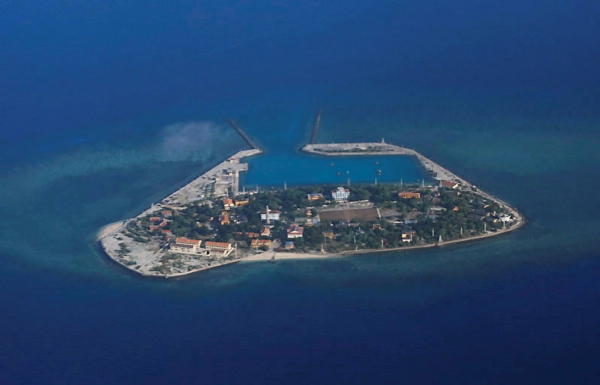
 Vietnam risks wider Spratlys dispute with more land reclamation: Chinese think tank


NB Security Scan 84 
 
 
The Beijing-based Grandview Institution says Hanoi ramped up island expansion in the South China Sea from 2021 using large dredgers
 
Vietnam has occupied more Chinese islands and reefs, stationed more troops and built more facilities than any other coastal state to the waters, it says.
 
 
India can be a real alternative to China in pharmaceuticals
 
 
Dependence on imported ingredients and quality assurance are being addressed
 
 
India imports over 80% of its APIs and KSMs for some drugs and formulations, with purchases from China continuing to rise over the last two years.
 
India is looking to reduce this dependence through initiatives such its production-linked incentive program, which provides subsidies for companies investing in new manufacturing facilities. This effort has already led to increased domestic production of KSMs such as penicillin G and clavulanic acid.
 
However, it will likely take a few more years and perhaps some tweaks to the subsidy program for India to substantially grow its API and KSM production capacity and reduce import dependence on China to offer a true "de-risked" alternative for global supply chains.
 
Hong Kong’s history as espionage hotbed is back in spotlight after duo arrested in UK. The Post shares portraits of past spies
 
Hong Kong’s loose visa requirements and lack of espionage laws before 2024 allowed city to become ideal location for collecting and exchanging sensitive information
 
The Post looks at residents caught up in spying cases from ‘Hong Kong’s first spy’ to two local men arrested in UK over espionage allegations.
 
 
China sanctions five Taiwan political pundits, rolls out law to punish ‘separatists’
 
 
China said it would sanction five Taiwanese political commentators and roll out a law to punish “separatists”, moves aimed at piling pressure on incoming president Lai Ching-te just days before he takes office.
 
The pundits’ remarks “deceived some people on the island, incited hostility and confrontation between the two sides of the Taiwan Strait, and hurt the feelings of compatriots on both sides”, said Mr Chen Binhua, spokesman for the government department in Beijing that handles affairs related to Taiwan, at a press briefing on May 15.
 
The five are regulars on political talk shows on the island of 23 million people that Beijing has pledged to bring under its control someday, by force if necessary.
 
 
Countering Internal & External Security Challenges
 
 
Muzaffarabad unrest: 3 killed in PoK as strike enters 5th day, Govt allocates aid
 
Amid the unrest in Pakistan-Occupied Kashmir, at least three people were killed and six others injured in clashes with security forces in PoK on May 14. Paramilitary rangers opened fire on protesters during clashes after protests were held against high prices of wheat flour and inflated electricity bills.
 
Pakistan-occupied Kashmir has remained tense as the strike against high prices of wheat flour and inflated electricity bills and taxes entered its fifth day on Tuesday, forcing the Pakistan government to allocate 23 billion Pakistani rupees (PKR) for immediate release to the region to quell the simmering unrest.
 
On May 9 and May 10, around 70 activists were arrested by the police in a bid to prevent a long march - announced by the Jammu Kashmir Joint Awami Action Committee (JAAC) to press the government to comply with an agreement reached between the two in February this year - triggering serious clashes in Dadyal and a “shutter-down strike" call.
 
 
Economic Security- India’s Remittances: A Record-Breaking Achievement with Implications
 
 
In 2022, India surged past the milestone of $111 billion in inward remittances, firmly cementing its status as the world’s foremost recipient of such funds. This remarkable feat not only underscores the indispensable contribution of Indian migrant workers worldwide but also underscores the pivotal role remittances play in bolstering economies globally. The 2024 World Migration Report by the International Organisation for Migration identifies India, alongside Mexico, China, the Philippines, and France, as the top recipients of remittances. India’s consistent rise in this regard reflects the enduring bonds between expatriates and their country of origin.
 
The UN report underscores the persistent risks of financial exploitation, burdensome debts resulting from migration expenses, xenophobia, and workplace abuse that afflict migrant communities.
 
Particularly in the Gulf Cooperation Council states, where a substantial number of Indian migrants reside, violations of rights continue to persist. The advent of the Covid-19 pandemic has further exacerbated the vulnerabilities of migrant workers, particularly those in low-skilled labour and the informal sector. Job losses, wage theft, and a lack of social safety nets have plunged many into profound insecurity and debt. The phenomenon of reverse internal migration signals a significant shift in labour dynamics, impacting industries reliant on migrant workers.
 
Addressing issues such as labour exploitation, equitable access to social protection, and establishing secure and orderly migration pathways are imperative for fostering sustainable development and nurturing inclusive growth.
 
 
Pakistan's moves to isolate Afghanistan are backfiring
 
 
Estrangement is driving the Taliban to work with Iran and India at Chabahar port
 
 
Growing strains between Afghanistan and Pakistan due to militant attacks that Islamabad blames on cross-border insurgents are reshaping relations between them as well as their ties with other neighbours.
 
In particular, landlocked Afghanistan is increasingly looking to Iran as an alternative route for international trade, a dramatic development that could bring Kabul into greater alignment with other regional powers including India and Russia and counteract efforts to isolate both Tehran and Kabul.
 
Both Taliban-run Afghanistan and Iran are, of course, Islamic regimes, but they are hardly natural allies. The Taliban adhere to a brand of Sunni fundamentalism and are not known for always treating followers of other Muslim sects with equal respect, while the Shiiite clerics who hold the reins in Tehran are known to similarly dis favour other denominations.
 
Border disputes, particularly in relation to shared water resources, are another long-running source of tension. Last month, Taliban troops seized five Iranian border guards who were said to have crossed into Afghan territory. The presence of millions of Afghan refugees in Iran has sometimes been a flashpoint too.
 
But the tensions between Pakistan and Afghanistan are fueling cooperation between Kabul and Tehran centered on Chabahar, Iran's first deep-water port.
 
For Kabul, Chabahar is by far the most accessible alternative to Pakistani ports like Karachi and Gwadar.
 
For its own strategic concerns, India has also long supported Chabahar's development as a pathway to reducing Afghan reliance on Pakistan and potentially improving its own access to Central Asian markets.
 
 
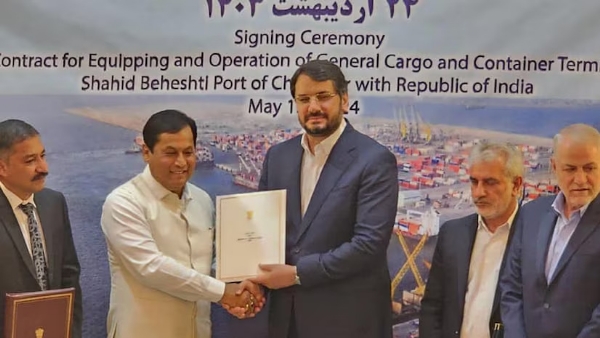
India inks 10-year deal to operate Iran's Chabahar port
 
Investment and financing bring contract's value to $370m
 
 
NB Security Scan 84 
 
 
India signed a 10-year contract with Iran on Monday to develop and operate the Iranian port of Chabahar, the Indian government said, strengthening relations with a strategic Middle Eastern nation.
 
India has been developing the port in Chabahar on Iran's south-eastern coast along the Gulf of Oman as a way to transport goods to Iran, Afghanistan and central Asian countries, bypassing the port of Karachi and Gwadar in its rival Pakistan.
 
U.S. sanctions on Iran, however, slowed the port's development.
 

Thursday, 25 April 2024

Countering Internal & External Security Challenges

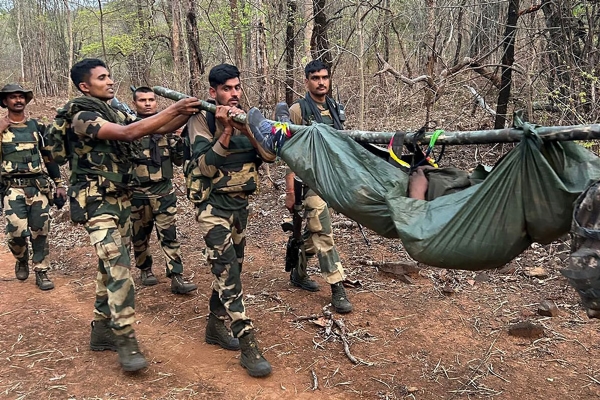
Security Forces Neutralize 29 Naxals in Chhattisgarh Jungles

 In a significant blow to Naxal insurgents, security forces executed a major operation resulting in the elimination of 29 extremists in the dense forests of Kanker, Chhattisgarh. Among the casualties was senior commander Shankar Rao, who carried a bounty of Rs 25 lakh. A substantial cache of weapons and ammunition was seized during the operation.
 
 
NB Security Scan 82 
 
 
The security forces received intelligence pinpointing the presence of high-ranking cadres like Lalita, Shankar Rao, and Raju in the region spanning between Abujhmad, Gadchiroli district in Maharashtra, and north Bastar. Acting swiftly, a joint team comprising District Reserve Guards (DRG) and Border Security Force (BSF) was deployed to the area.
 
Following the intense two-hour confrontation, confirmed the demise of 29 Naxals, including high-profile figures like Shankar Rao and Lalita. Three security personnel sustained injuries during the engagement and were promptly airlifted to Raipur for medical attention.
 
 
Chhattisgarh Chief Minister Vishnu Deo Sai applauded the joint efforts of the DRG and BSF, highlighting the operation's pivotal role in ensuring security ahead of the upcoming Lok Sabha elections. He reiterated the government's commitment to curbing Naxalism and fostering development in affected regions.
 
 
The Way Forward
 
 
Government data underscores a concerted push towards eradicating the Naxal menace, coupled with initiatives aimed at socio-economic development in affected areas. Analysts attribute the decline in Naxal-related incidents to the combined effect of strategic actions by the state and the waning influence of Naxal ideology.
 
 
India's Strategic Move: Partnering with NVIDIA to Bolster AI Capabilities
 
 
The Indian government is taking decisive steps towards enhancing the nation's AI infrastructure by contemplating a groundbreaking deal with NVIDIA, a leading chip-making giant. Valued at Rs 10,000 crore, this prospective collaboration aims to provide access to NVIDIA's cutting-edge GPUs and Neural Processing Units (NPUs) to Indian startups, research institutions, and academic bodies at subsidized rates, thereby fueling innovation in the AI sector.
 
 
Exploring Models for Acquisition
 
 
India is exploring two primary models for the acquisition and distribution of AI-capable NPUs and GPUs: a "rent-and-sublet" model and a marketplace model. Under the former, qualifying entities would receive GPUs on concessional terms directly from the government. Alternatively, the marketplace model encourages direct negotiations between companies and NVIDIA, with incentives tied to performance gains, akin to India's Production-Linked Incentive (PLI) scheme.
 
 
Addressing the Challenge of Scarcity and Cost
 
 
The scarcity and exorbitant cost of GPUs pose significant hurdles, particularly for startups. NVIDIA's top-tier H100 GPUs, priced at $50,000 each, and the Blackwell cards, priced at $40,000, underscore the financial barriers hindering access to essential computing resources. To put this into perspective, developing and training large AI models may require thousands of GPUs, a substantial investment for any organization.
 
 
Striving for Competitiveness
 
 
India's aspiration to remain competitive in AI research and development is evident through initiatives like the AI Mission, backed by a substantial allocation of Rs 10,372 crore. With plans to deploy 10,000 GPUs through public-private partnerships, India aims to bridge the gap in computing capabilities compared to global leaders in the AI space.
 
 
Navigating Global Dynamics
 
 
Navigating global dynamics in GPU acquisition requires strategic engagement with stakeholders and optimized approaches. While GPUs are acquired by both companies and government agencies globally, India's federal structure necessitates innovative solutions to secure access to these critical resources.
 
 
Driving Innovation and Sovereignty
 
 
The burgeoning demand for GPUs underscores their pivotal role in driving innovation and safeguarding the sovereignty of Indian data. Collaborations between Indian conglomerates and NVIDIA signify a collective effort to harness AI capabilities domestically, reducing reliance on foreign cloud resources and bolstering India's standing in the global AI landscape.
 
India's potential partnership with NVIDIA represents a seminal moment in its quest to bolster AI capabilities domestically. By fostering accessibility to advanced computing resources, India aims to unleash the full potential of its burgeoning AI ecosystem, driving innovation, competitiveness, and sovereignty in the digital age.
 

Friday, 29 March 2024

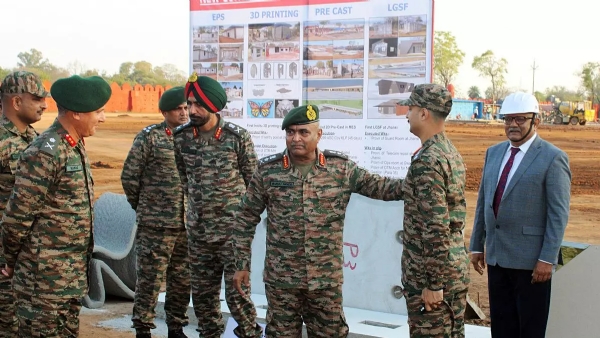
STEAG, the Indian Army's latest elite unit tailored for the warfare of tomorrow, Anti Piracy Operation Highlights India's Maritime Strength


 STEAG, short for Signals Technology Evaluation and Adaptation Group, represents a pioneering unit tasked with researching and evaluating cutting-edge communication technologies for future military endeavors. This includes delving into realms such as AI, machine learning, software-defined radios, electronic warfare systems, and the emerging frontier of 6G networks. Embedded within the Indian Army's strategic framework, STEAG stands as a testament to the nation's commitment to technological advancement in defense..
 
In anticipation of evolving battleground dynamics, the Indian Army has laid the foundation for the Signals Technology Evaluation and Adaptation Group (STEAG), an unprecedented initiative poised to shape the trajectory of military technology.
 
STEAG's mandate encompasses the comprehensive spectrum of wired and wireless systems, ensuring readiness for the technological demands of tomorrow's warfare landscape.
 
Pioneering the integration of future-ready technologies, STEAG is tasked with researching and evaluating a diverse array of communication technologies. These span electronic exchanges, mobile communications, software-defined radios, electronic warfare systems, and the impending evolution of 5G and 6G networks. Furthermore, STEAG's purview extends to cutting-edge domains such as quantum technologies, artificial intelligence, machine learning, and quantum computing, all earmarked for strategic military application.
 
 
NB Security Scan 79 
 
 
Recognizing the pivotal role of communication in modern warfare, STEAG underscores the importance of technological superiority in gaining a tactical edge over adversaries. As the dynamics of conflict continue to evolve, the ability to seamlessly connect disparate elements and facilitate information sharing will be paramount to success on the battlefield.
 
Anticipating the imperative of embracing 6G technology, STEAG stands poised to navigate the complexities of future military operations. With its potential to enhance command and control capabilities over unmanned military assets, 6G technology emerges as a force multiplier in shaping the future of warfare.
 
In the face of evolving threats and operational challenges, the induction of state-of-the-art equipment is indispensable to ensuring seamless communication support for military units and formations. Through initiatives such as STEAG, the Indian Army reaffirms its commitment to embracing technological advancements and enhancing its digital prowess on the battlefield.
 
What does Saudi Arabia joining the AI race mean for India?Saudi Arabia’s mammoth investment in AI signals a significant escalation in the global AI race.India faces funding challenges
 
While Saudi Arabia and other Gulf states surge ahead with massive investments, countries like India face the challenge of keeping pace. Despite unveiling its own AI mission, India’s investment pales in comparison, highlighting the need for alternative strategies. India aims to leverage partnerships and talent pool to compete effectively, with potential collaborations with established AI players like NVIDIA on the horizon.
 
With American firms leading the charge and Gulf states backing their ambitions with substantial funds, the pressure is on for nations like India to accelerate their AI initiatives.
 
Saudi Arabia’s mammoth investment in AI signals a significant escalation in the global AI race. As technology continues to reshape industries and economies, nations worldwide must adapt swiftly to remain competitive. The future of AI dominance hinges not just on financial prowess but also on fostering innovation, nurturing talent, and fostering strategic partnerships on a global scale.
 
 
Anti Piracy Operation Highlights India's Maritime Strength
 
 
The recent collaborative effort between the Indian Air Force (IAF) and the Indian Navy to liberate the merchant vessel MV Ruen from pirates in the Arabian Sea stands as a remarkable testament to the efficacy of Indian maritime security measures and inter-service coordination. The operation's success was marked by the precise deployment of two combat boats via the IAF's C-17 heavy-lift aircraft, complemented by the swift action of the Navy's MARCOS commandos. This resulted in the surrender of 35 pirates and the safe release of the vessel and its crew. Furthermore, the proactive stance exhibited by the Navy, reinforced by the presence of vessels like INS Kolkata and INS Subhadra, underscores India's commitment to safeguarding vital global trade routes.
 
The Navy's approach aligns with the United Nations Convention on the Law of the Sea (UNCLOS), which provides the legal framework for addressing piracy and ensuring safe navigation in international waters. By adhering to UNCLOS standards and engaging in collaborative efforts with global partners, India reaffirms its commitment to upholding maritime law and order, solidifying its position as a frontline responder on the high seas.
 
 
India in undersea race to mine world’s battery metal
 
 
India is taking another step in its quest to find valuable minerals hidden in the depths of the ocean which could hold the key to a cleaner future. The country, which already has two deep-sea exploration licenses in the Indian Ocean, has applied for two more amid increasing competition between major global powers to secure critical minerals. Countries including China, Russia and India are vying to reach the huge deposits of mineral resources - cobalt, nickel, copper, manganese - that lie thousands of meters below the surface of oceans. These are used to produce renewable energy such as solar and wind power, electric vehicles and battery technology needed to battle against climate change. The UN-affiliated International Seabed Authority (ISA) has issued 31 exploration licenses so far, of which 30 are active. Its member countries are meeting in Jamaica this week to discuss regulations around giving out mining licenses. If the ISA approves India's new applications, its license count will be equal to that of Russia and one less than China.