Total Pageviews

Showing posts with label #Indian Economic security. Show all posts

Monday, 3 August 2026

The Middle Class as India’s Engine of Growth For the Country

 India’s middle class grew from near non-existence at independence to a massive, aspirational engine of growth, driven by education, liberalisation in 1991, and rising consumption—but now faces serious pressures from high living costs, debt, and AI‑linked job uncertainty.

IIT Kharagpur: From Prison to Promise

The video opens with the founding of IIT Kharagpur in 1951, when 224 students and 42 teachers began classes inside the former Hijli Detention Camp, a prison where two freedom fighters had been shot dead in 1931. Twenty years after that tragedy, independent India turned this symbol of repression into its first Institute of Technology, signalling a new national commitment to higher education and scientific talent.

Education as a New Social Ladder

Institutions like IIT Kharagpur did more than produce engineers; they became the first rung of a new social ladder where talent, not birth or title, could determine a family’s future. Over the decades, these institutes helped create millions of engineers, scientists, entrepreneurs—and laid the foundations for one of the world’s largest middle classes.

Defining and Measuring India’s Middle Class

The video explains that “middle class” has no single global definition; countries and eras define it differently. In India, one practical benchmark is having roughly one‑third of income left after paying for essentials like food, housing, and basic necessities, which allows discretionary spending and signals middle‑class status.

From Colonial Poverty to Nation-Building

At independence in 1947, India was deeply impoverished: life expectancy was about 32 years, literacy around 12%, and average annual income approximately ₹250. Although India had once contributed about 25% of world GDP before colonial rule, by 1947 its share had collapsed to 3–4%, with fewer than 5% of Indians—mostly salaried government staff, teachers, and railway officers—qualifying as middle class and seeking basic stability rather than wealth.

IITs, Mixed Economy, and the License Raj

Post‑independence leaders sought to build a modern state by prioritising higher education and research, establishing five IITs between 1951 and 1961—Kharagpur, Bombay, Madras, Kanpur, and Delhi—to create a pipeline of skilled talent. India adopted a mixed economy in which the state controlled core sectors like steel, railways, and power, while the private sector operated mainly in consumer‑facing industries, but this system was constrained by the License Raj—an onerous regime requiring government licences for almost every business decision.

The “Hindu Rate of Growth” and a Small Middle Class

The License Raj throttled growth, keeping annual GDP expansion at roughly 3–4% from the 1950s to the 1980s, later dubbed the “Hindu rate of growth” by economist Raj Krishna. During this period, the middle class grew only from about 20 million people in 1947 to around 70 million by the 1980s—about 10% of the population—mostly salaried employees in government, public sector firms, and educational institutions.

Scarcity, Queues, and Early Signals of Change

For these middle‑class families, life was characterised by scarcity: one bought what was needed rather than desired, and even basic goods came slowly via long waiting lists for cars, telephones, or cooking gas. Yet the 1980s brought symbolic breakthroughs—color TV with the 1982 Asian Games and the launch of the Maruti 800 in 1983—which doubled car sales in two years and indicated that India was ready for higher consumption, even if policymakers did not immediately respond.

The 1991 Crisis: Gold, IMF, and a Turning Point

By June 1991, India faced a severe balance‑of‑payments crisis, with foreign exchange reserves under 1 billion dollars—barely enough for three weeks of imports and debt servicing. In a secret move, 67 tonnes of gold were airlifted and pledged as collateral for a 2.2‑billion‑dollar IMF loan, a moment that exposed the limits of a closed economy and forced a fundamental policy rethink.

1991 Reforms and the Middle-Class Boom

Finance Minister Dr Manmohan Singh’s 1991 budget ushered in liberalisation—scrapping import licences, cutting tariffs, encouraging private‑sector expansion, and inviting foreign investment. Economic growth quickly rose to about 6–7% annually, and by 2004 roughly 300 million Indians had joined the middle class; by 2012 that number had doubled to around 600 million, supported by sharp improvements in literacy, which rose from 12% in 1947 to more than 70% by the 2011 Census.

Expansion Under Modi and an Aspirational Middle Class

Under Prime Minister Modi, the video notes that some 250 million people have been lifted out of poverty, with an estimated 750 million Indians projected to be middle class by the end of this decade. Today’s middle class is diverse—rural entrepreneurs, metro IT professionals, and small business owners—but united by aspiration: a desire for foreign holidays, premium products, overseas education, and spending patterns increasingly linked to the dollar rather than the rupee.

2036 Outlook: Scale, Spending, and Global Role

India is already the world’s third‑largest middle‑class market, after China and the United States, and is projected to become the largest within the next decade. By 2036, this middle class is expected to generate 93% of India’s consumer spending, making it central to the country’s economic trajectory and global economic role.

Modern Pressures: Cost, Credit, and AI

Despite rising prosperity, the middle class faces mounting pressures: higher fuel prices, surging urban housing costs, expensive quality schooling, and limited access to affordable healthcare. To sustain their aspirations—new gadgets, cars, and foreign travel—many families rely on high‑interest loans, credit cards, and “buy now, pay later” schemes, which make their lifestyles look comfortable but leave their finances fragile, while AI‑driven changes further unsettle an already tight job market.

The Middle Class as India’s Engine of Growth

The video concludes that the Indian middle class now acts as the engine—not just the beneficiary—of national growth, shaping what India builds, buys, and ultimately becomes. From converting a colonial prison into IIT Kharagpur to building a vast and ambitious middle class, India’s story hinges on whether future opportunities can match rising ambitions, as the narrative of its middle class continues to unfold.

Wednesday, 3 June 2026

Economic Power Needs a Weaker Currency


Rising industrial powers have repeatedly treated currency competitiveness as a growth tool. From the United States’ push to weaken the dollar under the Plaza Accord, to China’s decades-long resistance to letting the renminbi appreciate under U.S. pressure, the pattern is consistent: when manufacturing wants to scale, exchange-rate policy becomes strategic. India’s central bank, however, has largely done the reverse.

The Plaza Moment: Currency, Not Industry

In September 1985, Noboru Takeshita—Japan’s finance minister—left Tokyo under cover of a private golf outing, then flew to New York. The secrecy mattered because Japan had spent the prior decade deliberately keeping the yen weak, building trade surpluses against the United States, and resisting American demands for currency appreciation.

That resistance ended with the Plaza Hotel meeting—secretive, urgent, and decisive.

A Secret Agreement to Weaken the Dollar

That evening, Takeshita joined U.S., West German, French, and British finance ministers at the Plaza, summoned by Treasury Secretary James Baker. The meeting was not about Detroit’s competitiveness alone. It was about fixing the exchange rate as the instrument of adjustment.

When discussions ended, the U.S. had persuaded allies to help weaken the dollar, and Japan agreed to let the yen rise. Over the next two years, the dollar fell sharply—from roughly 240 yen to around 150—and then dropped below 130 soon after. Detroit gained breathing room it could not have earned on policy alone.

The Trade-Off Japan Accepted

Japan’s acceptance came with consequences. The yen’s rise helped fuel an asset bubble, later contributing to a banking crisis and decades of slower growth. Still, Plaza represented strategic clarity for the country that chose to bargain.

For the country that arrived quietly and negotiated in private, the cost was also political: being a creditor in an American century.

China Took the Opposite Path

China watched Japan’s agreement and moved differently. Through WTO complaints, Treasury reports, and pressure from multiple U.S. administrations, Beijing was accused of currency manipulation. Yet the renminbi stayed constrained.

Beijing’s logic was clear: if the exchange rate rose faster than China’s industrial strategy required, Chinese manufacturing would be priced out of global markets before reaching scale. So the renminbi remained relatively cheap—and exports accumulated.

Weak Currencies, Strong Strategies

These were not “weak” countries seeking comfort from weak money. They were serious economies using policy choices aligned with the stage of development. Growth needs direction, not just stability.

Why Competitive Currencies Matter

The logic is straightforward. A developing economy does not become rich by buying the world’s output at a prestigious exchange rate. It becomes rich by selling more of its own output to the world.

A competitive currency:

  • lowers the foreign-currency price of exports,
  • raises the domestic payoff from export production,
  • draws investment into tradable sectors, and
  • shifts scarce foreign exchange away from luxury consumption and toward productive capacity.

If industry is ready, depreciation is not merely a number changing on a screen—it changes the structure of growth.

India’s Timing: Capacity Built Under a Defended Rupee

India, by contrast, has resisted that adjustment. From 2022 through 2024, the Reserve Bank of India delivered unusually low rupee volatility, holding the currency comparatively steady against the dollar while other emerging markets adjusted. The rupee was defended as a matter of “honour” rather than deployed as an instrument.

This occurred during the period when production-linked incentive (PLI) schemes were building real capacity. Mobile phone imports reportedly fell sharply from FY21, and India scaled into becoming one of the world’s largest smartphone producers. The country was also ramping up industrial capability across multiple PLI sectors—factories that did not exist years earlier are shipping today.

Exchange Rate Meets the Export Chain

That matters because exchange rates decide whether a country captures global market share or hands it back to competitors. Capacity sits at the exact point in the export chain where currency competitiveness becomes pivotal.

But while PLI was building export capability through fiscal incentives, the central bank spent reserves to keep the rupee from doing the work that those incentives were meant to unlock. The two policy arms pulled against each other.

Paying the Fiscal Bill Twice

India has already paid the fiscal cost of building capacity through PLI. Refusing to let the exchange rate work now forces the country to pay twice:

  1. through PLI outlays to build capacity, and
  2. through reserve spending to prevent the currency from helping monetize it.

Even so, the rupee has since moved lower—past the mid-to-high 90s per dollar. Reserves have declined sharply, and market pressure has increased: foreign portfolio investors have reportedly withdrawn substantial amounts from Indian equities, while net FDI has been thin around turning points. Additional measures—including higher gold duties—and public requests to reduce gold purchases and certain spending reflect the severity of the moment.

The Real Lesson from Japan

If commentators were correct that the “psychology” of the exchange rate is the main issue, Japan would still be a cautionary tale for the wrong reason. The yen trades above 150 to the dollar today, yet Japan is not a failed state. It remains a developed economy with deep manufacturing and long-built net foreign assets. The productive base speaks louder than the exchange board.

The Problem Isn’t the Weaker Rupee—It’s the Delay

The real issue is not that India has a weaker rupee. The issue is that India spent decades without building enough export structure to make currency weakness manageable—or useful.

Once capacity began to come online, a different exchange-rate policy should have been in place long before this crisis demanded action.

The Creditor Path Is a Sequence, Not a Shortcut

Geoffrey Crowther described a pattern visible across major economies: countries begin as debtors, build manufacturing exports, generate trade surpluses, and only later graduate to creditor status. Britain, America, Japan, Korea, and China followed that road in order.

Currency strength typically arrives at the end of the journey, not at the beginning. India is trying to skip the line: demanding the prestige of a firm currency while manufacturing sits at relatively low levels and the import bill remains heavy.

The Ghost of 1991 Still Runs the Policy

India’s rupee politics still reflects trauma from 1991. In May and July of that year, emergency financing required gold to be moved as collateral—reportedly including shipments of 67 tonnes—while reserves fell to extremely limited coverage. The rupee was devalued quickly, and India entered an IMF structural adjustment programme.

That episode entered national memory as humiliation. Since then, many decisions by the RBI have operated under the shadow of that fear.

What the Trauma Narrative Misses

The deeper question is what devaluation actually enabled. During the 1990s and 2000s—when the rupee was weak and stayed competitive—India’s services sector found its global moment. The wage arbitrage that underpins hundreds of billions in services exports today depended on a competitive exchange rate.

Services also required fewer of the inputs that manufacturing needs. Manufacturing demands ports, reliable power, supplier ecosystems, land logistics, and labour flexibility. Today, those constraints are less binding than before due to PLI, infrastructure spending, and geopolitical realignment like China+1.

What built services was a competitive currency meeting prepared capacity. That condition now increasingly holds for manufacturing too.

A Tool, Not a Shame: Competitive Depreciation as Policy

A currency that weakens in a crisis is a symptom of failure. A currency managed competitively during development is an instrument. China, Japan, and the United States understood that distinction when it mattered. They were not ashamed of competitive currencies; they engineered them.

The Policy India Still Needs

India is already doing pieces of what a coherent strategy would require: higher gold duties to ration a non-essential import, messaging aimed at reducing foreign travel and dollar demand, and a shift from defending fixed levels toward smoothing volatility.

But these measures are reactive—firefighting rather than framework.

A Coherent Package: Direction + Protection + Industrial Use

India can make deliberate depreciation socially viable because it has stronger targeting capacity than in earlier decades. Direct Benefit Transfers reach hundreds of central schemes and thousands of state programmes. This makes it possible to shield the bottom 40–50% from import-price pass-through with fine-grained precision.

Protect what truly matters—food, essentials, public transport, fertiliser, and cooking fuel. Let upper-income import preferences adjust.

A coherent package then becomes:

  • managed depreciation that reduces volatility without blocking direction,
  • targeted cushioning for essential consumption,
  • industrial policy that directs exchange-rate benefits into manufacturing investment, and
  • reserve management that preserves capacity for genuine shocks rather than routine delay.

The Cost of “Delaying the Inevitable”

The danger is not a rupee at 100. The danger is arriving there after burning reserves to postpone adjustment. That is the most expensive route to the same destination.

The Path to Economic Power Runs Through a Weaker Currency

India is not exempt from the rule. In fact, it is the country most determined—so far—to behave as if the rule does not apply.

Tuesday, 2 June 2026

Industrial Policy – Not the What, But the How


Summary: Industrial Policy – Not the What, But the How

1. The Debate in India

  • For decades, Indian commentary has been split:

    • Dirigistes: argue reforms went too far, want state-led industrial policy back.

    • Liberalisers: warn that state direction revives licence-raj inefficiencies.

  • Chief Economic Advisor Dr. V. Anantha Nageswaran reframes the debate: India never stopped industrial policy; the issue is not what policy, but how it is implemented.

2. The “Missing Middle” Problem

  • India has millions of micro firms and a few large ones, but very few mid-sized enterprises.

  • Decades of SME-friendly policies (reservations, subsidies, carve-outs) created survival, not competitiveness.

  • Nageswaran: “It is not for want of the what. It is a want of the how.”

3. Lessons from East Asia

  • Northeast Asia (Japan, Korea, Taiwan, Singapore): aggressive industrial policy succeeded due to discipline — time-bound protections, export-performance requirements, simulated competition.

  • Southeast Asia (Philippines, Indonesia, Malaysia, Thailand): similar tools but failed due to permanent protection and lack of discipline.

  • India’s record resembles Southeast Asia: protection without discipline.

4. Discipline Framework

Nageswaran outlines three principles:

  1. Simulate competition where none exists (R&D quotas, benchmarks).

  2. Benchmark globally — firms must compete internationally.

  3. Time-bound protections — tariffs, subsidies, duties must be reviewed and withdrawn when ineffective.

5. India’s Second Chance

  • The window for industrial policy reopened due to deglobalisation trends (Brexit, COVID, Ukraine war, US-China trade conflict).

  • Every major economy is now pursuing industrial policy (US CHIPS Act, EU Critical Raw Materials Act, China’s ongoing state-led model).

  • India has demographic strength, macro stability, and geopolitical opportunity.

  • Current instruments: PLI scheme, cluster revival, deregulation, IndiaAI Mission, Gift City sandbox.

6. Early Grades

  • PLI Scheme: well-designed (time-bound, performance-linked). Some sectors (mobiles, semiconductors) show progress; others lag. The test is whether failures are shut down or politically entrenched.

  • Tariff Protection: danger zone — politically permanent, risks becoming “Indonesian-style” entrenchment.

  • Cluster Manufacturing: promising (e.g., Tirupur apparel cluster), but still smaller than global competitors (Dhaka). Needs export discipline to scale.

7. The Test Ahead

  • India must embed discipline into industrial policy:

    • Sunset clauses that actually expire.

    • Independent cost-benefit reviews.

    • Willingness to let firms fail if they don’t deliver.

    • Accountability for clusters to scale globally.

  • The next 20 years will decide whether India resembles Korea (success) or Indonesia (failure).

  • Nehru wanted growth too — but chose the wrong instruments. India must now choose better ones and have the courage to withdraw them when necessary.

भारताचा शेअर बाजार घसरला-REASONS


  • भारताचा जागतिक क्रमांक ५ वरून ७ वर घसरला.

  • बाजार भांडवल आता ४.८ ट्रिलियन डॉलर, तर तैवान व दक्षिण कोरिया ५ ट्रिलियन डॉलरपेक्षा जास्त.

  • कारणे: परदेशी गुंतवणूकदारांचा मोठा पलायन, आयटी क्षेत्रातील कमजोरी, आणि अमेरिका–इराण संघर्षाचा परिणाम.

🚀 तैवान व दक्षिण कोरियाची भरारी

  • कृत्रिम बुद्धिमत्ता (AI) व सेमीकंडक्टर उद्योगामुळे मोठी वाढ.

  • तैवान: TSMC मध्ये ५०% वाढ, आता बाजार भांडवलाच्या ४०–४५% हिस्सा.

  • दक्षिण कोरिया: Samsung व SK Hynix यांनी मेमरी-चिप मागणीमुळे बाजारात वर्चस्व मिळवले.

  • Kospi ९९% YTD, Taiex ५५% YTD वाढ.

📊 भारतातील कमजोरी

  • Sensex: डिसेंबर २०२५ मध्ये ८६,१५९ उच्चांक, आता १३% घसरला.

  • Nifty50: १०.९% YTD घसरण, अमेरिका–इराण युद्धानंतर ६.७% खाली.

  • आयटी क्षेत्र: TCS (−२४%), Infosys (−२२%), HCL (−२३%), Wipro (−२१%).

  • FPIs: २०२६ मध्ये आतापर्यंत ₹२.३ लाख कोटींची विक्री.

  • MSCI EM निर्देशांकात भारताचा हिस्सा १९% वरून १२% झाला.

🌍 बाह्य दबाव

  • अमेरिका–इराण संघर्षामुळे गुंतवणूकदार सुरक्षित मालमत्तेकडे वळले.

  • कच्च्या तेलाच्या किंमती वाढल्याने परकीय चलन साठ्यावर ताण.

  • रुपया घसरला: १ USD = ₹९५ पेक्षा जास्त.

  • अमेरिकेचे शुल्क: २०२५ मध्ये ५०% शुल्क, नंतर १८% पर्यंत कमी.

🔮 पुढील दिशा

  • पुनरुज्जीवनासाठी आवश्यक:

    • अमेरिका–इराण संघर्षाचा शेवट

    • कच्च्या तेलाच्या किंमती $८५/barrel पर्यंत खाली येणे

    • कॉर्पोरेट नफा वाढ (CY25 मध्ये १३%, CY26 मध्ये १६% अपेक्षित).

  • भारताची मूलभूत ताकद कायम:

    • GDP वाढ ७% पेक्षा जास्त

    • महागाई फक्त २.१% (दशकातील नीचांकी)

    • लोकसंख्या लाभ, धोरणात्मक गुंतवणूक, बचतीचे वित्तीयीकरण.

  • तज्ज्ञांचे मत: तैवान व कोरियाची वाढ काही कंपन्यांवरच अवलंबून, त्यामुळे टिकाऊपणाबद्दल शंका.

थोडक्यात: तैवान व दक्षिण कोरिया यांनी AI सेमीकंडक्टर उद्योगामुळे झपाट्याने वाढ केली, तर भारताला परदेशी गुंतवणूकदारांचा पलायन, आयटी क्षेत्रातील घसरण, आणि भू-राजकीय संकटामुळे फटका बसला. दीर्घकालीन दृष्टीने भारताची पायाभूत ताकद मजबूत आहे, पण अल्पकालीन सुधारणा जागतिक स्थैर्य व ऊर्जा किंमतींवर अवलंबून आहे.

REASONS-India’s Stock Market Drop


  • India slipped from 5th to 7th largest stock market globally in just over a week.

  • Market capitalization fell to $4.8 trillion, overtaken by Taiwan ($5 trillion+) and South Korea ($5 trillion).

  • The decline is linked to foreign capital exodus, weak IT sector performance, and external shocks like the US–Iran conflict.

🚀 Why Taiwan & South Korea Surged

  • AI-driven semiconductor boom fueled rallies.

  • Taiwan: TSMC rallied 50%, now accounts for 40–45% of Taiwan’s market cap.

  • South Korea: Samsung & SK Hynix benefited from AI memory-chip demand, making up 50% of Korea’s market cap.

  • Both markets saw record-breaking gains: Kospi up 99% YTD, Taiex up 55% YTD.

📊 India’s Market Weakness

  • Sensex: Hit lifetime high of 86,159 in Dec 2025, now down 13%.

  • Nifty50: Down 10.9% YTD, 6.7% since US–Iran war began.

  • IT sector: TCS (−24%), Infosys (−22%), HCL (−23%), Wipro (−21%).

  • Foreign Portfolio Investors (FPIs): Net sellers almost every month in 2026, withdrawing ₹2.3 lakh crore so far.

  • India’s weight in MSCI EM index fell from 19% to 12%.

🌍 External Pressures

  • US–Iran conflict triggered global risk aversion.

  • Rising crude oil prices strained forex reserves.

  • Rupee depreciation: Worst-performing Asian currency, now over ₹95 per USD.

  • Tariffs: US imposed 50% tariffs in 2025 (later reduced to 18%), causing investor flight.

🔮 Outlook

  • Analysts say India’s recovery depends on:

    • Resolution of US–Iran conflict

    • Crude oil prices falling to ~$85/barrel

    • Earnings growth revival (expected 13% in CY25, 16% in CY26)

  • India’s fundamentals remain strong:

    • GDP growth above 7%

    • Inflation at 2.1% (lowest in decades)

    • Structural drivers: demographic dividend, policy-driven capex, financialization of savings.

  • Experts caution that Taiwan & Korea’s rallies are concentrated in a few firms, raising sustainability concerns.

In short: Taiwan and South Korea surged ahead of India due to the AI semiconductor boom, while India faced foreign capital outflows, IT sector weakness, and geopolitical shocks. Long-term fundamentals for India remain intact, but near-term recovery hinges on global stability and energy prices.

Wednesday, 27 May 2026

STATE OF INDIAN ECONOMY DR MONTEK SINGH AHLUWALIA

 In this exclusive interview on Business Today, Dr. Montek Singh Ahluwalia, former Chairperson of the Planning Commission, shares a critical perspective on India's current economic landscape. He warns that the country faces severe global headwinds and outlines why immediate, transparent reforms are essential.

Here is a summary of the key insights from his discussion:

1. Fuel Prices and Currency Depreciation

  • Inevitable Price Hikes: Dr. Ahluwalia agrees with the government's decision to pass fuel price increases onto consumers [00:34]. He explains that shielding the public completely would drastically worsen the fiscal deficit [01:31].

  • The Rupee's Slide: He supports the decision to let the Indian Rupee float and depreciate according to market conditions [06:18], viewing it as a necessary adjustment when foreign capital inflows dry up.

2. A Call for Policy Transparency

  • Administered Pricing: He highlights that despite claims of dismantling the "administered price mechanism," fuel pricing in India remains effectively controlled by the government [02:42]. He urges for greater transparency so citizens understand the true economic costs [02:49].

  • The Energy and Fertilizer Crisis: India imports 80% of its oil, meaning it cannot pretend to be isolated from global energy stress [10:00]. Additionally, he points out that heavily subsidizing fertilizers (pricing them at just 10% of import costs) is unsustainable and leads to smuggling across borders [10:45].

3. Investment Bottlenecks & Trade

  • Investor Uncertainty: A major structural weakness is low private investment and foreign direct investment (FDI) outflows [04:22, 05:19]. He notes that the termination of Bilateral Investment Treaties (BITs) in 2015 has left international investors anxious about legal protections in India [07:50].

  • Missed Trade Opportunities: While praising recent Free Trade Agreements (FTAs) with the UK and EU [06:41], he believes India missed out on crucial East Asian growth by avoiding regional pacts. He recommends India seek entry into the Comprehensive and Progressive Agreement for Trans-Pacific Partnership (CPTPP) [07:02].

4. Turning Crisis into an Opportunity for Reform

  • The 1991 Parallel: Drawing from his experience during India's landmark 1991 balance of payments crisis, Dr. Ahluwalia states that economic stress should be leveraged to push tough structural changes [11:23]. He notes that in 1991, the heavy lifting was done before the budget, and the budget speech was simply used to explain the rationale [13:55].

  • External Expertise: He advises the government not to rely solely on internal bureaucracies or ministries to craft policies [17:13]. Instead, they should bring in fresh, outside ideas through expert committees and consultation with top private-sector leaders to minimize intrusive, old-fashioned regulatory systems [17:27, 18:44].

5. Fiscal Discipline & Federal Risks

  • State Deficits: He expresses deep concern over the "freebie culture" and rising revenue deficits at the subnational (state) level [19:11]. He warns that a loss of discipline here can precipitate a macro crisis and insists that the central government strictly cap state borrowing limits [19:41].

Conclusion

Dr. Ahluwalia acknowledges successful legacy reforms like the scale-up of Aadhaar and the introduction of GST [15:11]. However, he notes that "holding back" on further simplifications (like creating a single GST rate or pushing through promised privatizations) hurts growth [15:44, 16:27]. His ultimate takeaway for the government is that it must move past slogans, embrace constructive criticism, and "walk the talk" on economic transformation [21:27, 22:04].

Friday, 11 July 2025

*NVIDIA at $4 Trillion: A Geo-economics and Geopolitical Paradigm Shift in the Age of AI*


The recent milestone achieved by NVIDIA—reaching a market capitalization of USD 4 trillion—is more than a financial landmark. It is a defining moment in the evolving landscape of geopolitics and geo-economics. In surpassing the GDPs of most nations, NVIDIA has emerged as a symbol of the new power dynamics where multinational corporations (MNCs), especially those at the forefront of artificial intelligence (AI), increasingly rival the influence of sovereign states.


*Geo-economics: The Power of Ideas Over Resources*


Traditionally, economic strength was measured by control over physical resources—oil, minerals, arable land. However, NVIDIA’s rise reflects a seismic shift where ideas, algorithms, and intellectual property hold more economic value than natural assets. As the primary supplier of AI chips and high-performance computing GPUs, NVIDIA controls the backbone of the global AI revolution. This gives it not only market dominance but significant strategic leverage.

This elevation of corporate power marks a new phase in geo-economics—one where platform companies dictate value chains, influence labour markets, and even shape national digital policies. Nations without strong technological ecosystems may find themselves increasingly dependent on a handful of firms like NVIDIA, thus reinforcing global digital asymmetries.


*Geopolitics: The Silicon Shield and Strategic Dependencies*


NVIDIA's ascent is not just a triumph of technology but also a product of global political undercurrents. The U.S.–China tech rivalry, export controls on advanced semiconductors, and sanctions have spotlighted NVIDIA as a central player in America's strategy to maintain technological superiority. Its chips are critical for military applications, autonomous systems, cyber capabilities, and AI-driven surveillance—making it not just a commercial entity, but a geopolitical asset.

This centrality elevates the geopolitical value of companies like NVIDIA. Much like oil companies once shaped Middle Eastern politics, today’s AI firms can influence diplomatic alignments, economic sanctions, and global trade. The “Silicon Shield”—once referenced in the context of Taiwan’s TSMC—now extends to U.S.-based giants that anchor the Western AI and semiconductor ecosystem.


*The Sovereignty Question: Nation-States vs Corporations*


NVIDIA’s valuation—greater than the GDPs of Germany, India (on a PPP basis), or the United Kingdom—raises a critical question: Are we entering an era where corporations possess more practical influence than sovereign states? With their ability to control data flows, labour trends, digital infrastructure, and even policy outcomes through lobbying and regulatory capture, tech multinationals challenge the traditional understanding of national sovereignty.

The implication is profound: in the AI age, the locus of power may no longer rest solely in capitals and parliaments, but also in boardrooms and innovation labs.


*Conclusion: Rethinking Global Power*


NVIDIA’s USD 4 trillion milestone is not merely a triumph of corporate success—it is a signal of transformation in the global order. It compels policymakers, scholars, and strategists to rethink power—moving from a Westphalian world of states to a post-digital order of sovereign corporations. The geopolitical future will be shaped not just by military alliances or natural resources, but by who controls the code, who owns the chips, and who shapes the minds of machines.

As we stand at the intersection of AI, economics, and global politics, NVIDIA’s rise is a reminder that in the 21st century, the most powerful entity may not wear a flag—but a logo.


Friday, 6 September 2024

The State of the Chinese Economy-Gap Between Chinese & Indian Economy is Reducing

Potential for Growth

  
China's economic growth has been slowing in recent years, transitioning from rapid, double-digit growth to a more moderate pace. However, it still remains one of the world's largest economies and continues to hold significant potential for growth. Key drivers of future growth include:
- Domestic Consumption: As incomes rise, Chinese consumers are spending more, which can boost domestic demand and economic activity.
 
- Technological Innovation: China is investing heavily in technology and innovation, which can drive productivity and create new industries.
 
- Infrastructure Development: Continued investment in infrastructure, such as transportation and energy, can support economic growth and improve efficiency.
 
 
Exports and Imports
 
 
China is a major global trading power, with both its exports and imports playing a significant role in its economy. While China's exports have continued to grow, there have been concerns about the impact of trade tensions with the United States and other countries.
 
 
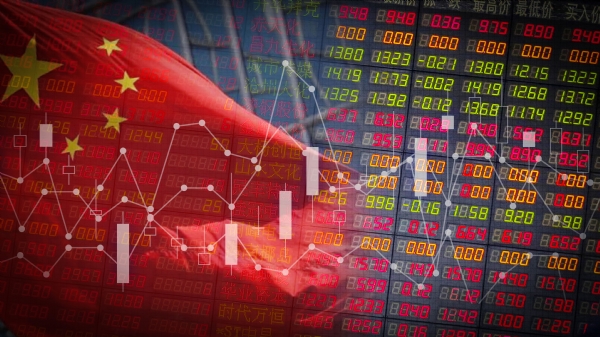
Chinese Stock Market
 

NB Security Scan 94
 
 
The Chinese stock market has experienced both ups and downs in recent years. It has been influenced by factors such as economic growth, government policies, and global market trends. While there have been periods of volatility, the Chinese stock market remains a significant player in the global financial landscape.
 
Overall, the Chinese economy is facing a period of transition. While it still has significant potential for growth, it is also grappling with challenges such as slowing economic growth, trade tensions, and demographic changes.
 
The relative performance of the Chinese and Indian economies has been a topic of interest in recent years. While India has been one of the fastest-growing major economies globally, China's economic growth has been gradually slowing down. Here are some key points between the Chinese and Indian economies:
 
 
Economic Growth Rates:
 
India's Rapid Growth: India has consistently been one of the fastest-growing major economies in recent years, driven by factors like a large youth population, economic reforms, and a growing middle class.
 
China's Slowing Growth: China's economic growth has been moderating as it transitions to a more sustainable growth model, moving away from export-led growth towards consumption and services.
 
 
Convergence in Growth Rates:
 
Reduced Gap: The difference in growth rates between China and India has indeed been narrowing, with India's growth outpacing China's in some recent years.
 
Convergence: This convergence in growth rates suggests that the gap between the two economies may be reducing.
 
 
Factors Influencing the Trend:
 
Structural Differences: China's economy is more export-oriented and has a higher level of industrialization compared to India, while India's economy is driven more by domestic consumption and services.
 
 
Future Outlook:
 
Potential for Catching Up: While India has been closing the gap in growth rates with China, there are challenges such as infrastructure deficits, bureaucratic hurdles, and regulatory complexities that could hinder its ability to sustain rapid growth.
 
Rebalancing Priorities: China's focus on quality growth, technological innovation, and sustainability is likely to influence its economic trajectory in the coming years, potentially leading to a more balanced and resilient economy.
 
While India has been narrowing the growth differential with China and has shown strong growth momentum, China's economy remains significantly larger and more industrialized.
 
 
Declining Foreign Investment in China
 
Foreign investment in China is rapidly declining due to heightened geopolitical tensions and unpredictable regulatory measures. Many European Union and Japanese companies are approaching China with increased caution. Meanwhile, India is positioning itself as an attractive alternative for investors who are growing wary of China.
 
 
The Shift in Foreign Capital Flows
 
China, once a magnet for foreign capital due to its exceptional growth, is now seeing a significant reduction in foreign investment. From stock markets to private equity and foreign direct investment (FDI), the flow of foreign money into China is dwindling. China's stock exchanges have stopped releasing daily data on overseas fund flows, which has led to increased concerns among investors. Analysts believe that if the current trend continues, China may experience its first annual outflow from its stock market since 2016. This shift is largely attributed to foreign funds steadily withdrawing from the market, with year-to-date figures showing a negative trend as of August 19.
 
Private Equity Firms Reconsidering China
 
 
NB Security Scan 94
 
 
Top private equity firms such as Blackstone, KKR, and Carlyle have significantly slowed their investments in China. Geopolitical tensions and Beijing's tighter control over businesses have made dealmaking in China more challenging. In recent years, the number of new investments by the ten largest global buyout firms in China has plummeted, with only five small deals made this year. Concerns about the risks of investing in mainland China have led to secondary buyers demanding steep discounts, ranging from 30% to over 60%.
 
 
Foreign Direct Investment Hits a Low
 
Foreign direct investment (FDI) into China has reached its lowest point since the early 1990s. In 2023, China's direct investment liabilities rose by only $33 billion, an 82% decrease from 2022. This decline underscores the challenges Beijing faces in attracting overseas investment to boost its economy. The third quarter of 2023 marked the first time since 1998 that investment fell. With advanced economies raising interest rates and Beijing cutting them, there is an increasing preference among multinational companies to keep their capital outside of China.
 
 
European and Japanese Firms Losing Confidence
 
The 2024 Business Confidence Survey by the European Union Chamber of Commerce in China revealed a continued downward trend in business confidence among European firms, despite China's reopening in early 2023. Structural issues such as sluggish demand, overcapacity, and challenges in the real estate sector have further dampened confidence. The survey also highlighted that 68% of respondents found doing business in China more difficult, marking the highest percentage on record. Majority of Japanese firms have either reduced or maintained their investment levels in China, with many expressing a negative outlook for 2024.
 
 
India's Opportunity to Attract Foreign Investment
 
As foreign capital inflows into China decrease, India sees an opportunity to attract these investors. India's GDP growth forecast for 2024 has been revised upward, making it an appealing alternative for companies looking to diversify away from China. India has set an ambitious target of attracting at least $100 billion annually in foreign direct investment over the next five years. Strategic reforms are being suggested to enhance India's appeal to global investors, including reducing costs for companies relocating to India, improving the ease of doing business, and establishing a framework for evaluating investment proposals.
 
 
A Changing Investment Landscape
 
The decline in foreign investment in China reflects broader geopolitical and economic shifts. As China becomes a less attractive destination for foreign capital, countries like India are positioning themselves as viable alternatives. However, for India to fully capitalize on this opportunity, strategic reforms and improved investment conditions are essential.